Introduction
For two years, companies have promised that artificial intelligence will make them more efficient and more profitable. Investors kept asking the same question: show me the money.
In this earnings season, some companies are finally starting to answer — with numbers, even if those numbers are still rough.
What Happened
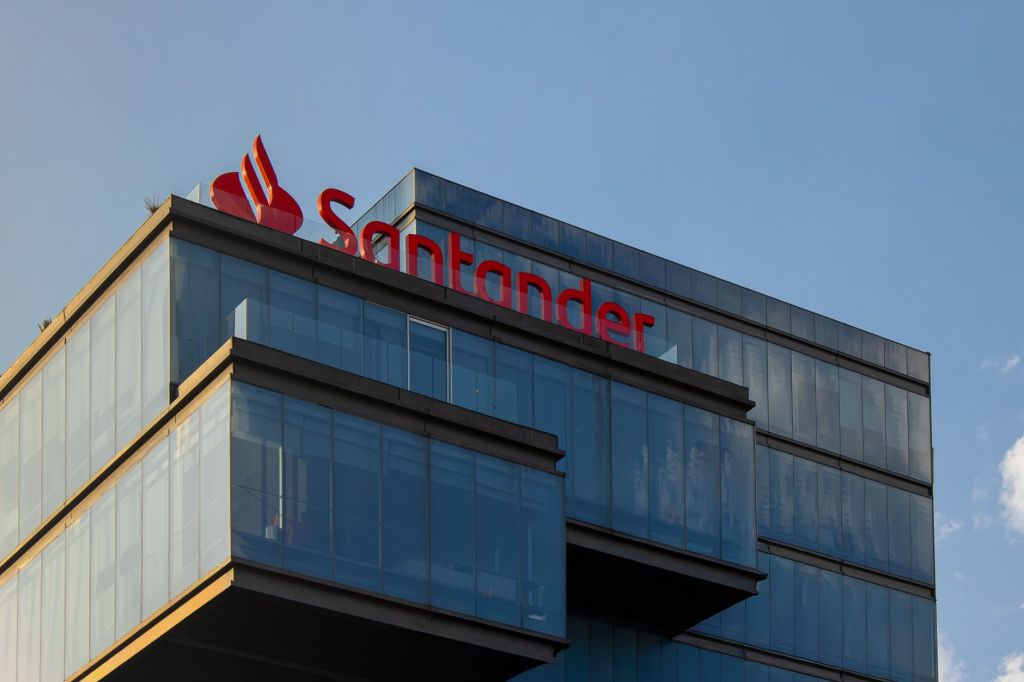
Spanish bank Santander said its AI initiatives generated €194 million (about $216 million) in business value in the first nine months of 2026. The bank reported the figure alongside record underlying profit of €11.18 billion for the same period, up 16% from a year earlier.
Other companies pointed in the same direction without giving an AI-specific total. Drug maker Novartis reported third-quarter core operating income of $6.04 billion, up 10% at constant currencies, and said AI had begun to improve its bottom line. Standard Chartered reported third-quarter operating income growth of 14% at constant currency, excluding notable items, and said AI tools were helping it scale more efficiently.
Key figures
- Santander AI business value, first nine months of 2026: €194 million (about $216 million)
- Santander underlying profit, same period: €11.18 billion, up 16%
- Novartis Q3 core operating income: $6.04 billion, up 10% at constant currencies
- Standard Chartered Q3 operating income growth: 14% at constant currency, excluding notable items
- Global corporate AI investment in 2025: $581.7 billion, up 130% from the prior year (Stanford HAI 2026 AI Index)
Why It Happened
Santander’s chief financial officer, José García Cantera, said AI is helping the bank cut low-value tasks so employees can focus on higher-value work. That affects both revenue and costs, he said — the first quarter, in his words, where the bank could directly link a positive contribution to AI.
But there is an important warning attached to the number. Santander’s €194 million is a company-defined measure, not a standard accounting figure. It combines extra revenue, cost savings and lower loan-loss provisions from its data and AI programmes, and it was not audited as a separate measure. In other words, it is the bank’s own best estimate, not a figure every company calculates the same way.
That is why comparisons are tricky. Meta linked AI to stronger advertising growth but gave no AI-only revenue figure. Alphabet’s Google Cloud revenue jumped 103% to $30.71 billion, helped by AI demand, but that is a whole business line, not an AI profit number. And not every company is seeing gains yet: brewer Carlsberg said this week it is not seeing AI benefits at scale, even though the technology has affected costs, pricing and marketing.
Why It Matters
The €194 million matters less as a precise profit count and more as a sign of a shift. Companies are moving from talking about AI pilots to trying to measure AI in their accounts. Investors have been worried that AI spending — $581.7 billion globally in 2025 alone — is growing faster than AI returns. Even small, honest numbers help answer that worry.
At the same time, the different yardsticks are a reason to stay careful. When every company measures AI differently, a big number from one firm cannot be directly compared with a vague claim from another.
What Happens Next
Expect more companies to publish AI numbers in the next few earnings seasons, and expect analysts to push them on how those numbers are calculated. The useful question is not just ‘how much did AI add?’ but ‘how did you count it, and would another company count it the same way?’
Santander itself has set a bigger target: its chair has said AI should help grow annual revenue by about €300 million and cut costs by about €700 million by 2028. That gives investors something concrete to check against in future reports.
Final Thoughts
AI is starting to show up in earnings, not just in presentations. Santander’s €194 million is a first step, not a final proof. The companies that win trust will be the ones that explain their numbers clearly — and keep reporting them, good quarter or bad.
Related: Anthropic IPO, Nasdaq and AI spending worries
Disclaimer: This article is for educational and informational purposes only and does not constitute financial advice.
Sources: CNBC, https://www.cnbc.com/2026/11/01/ai-investments-company-earnings.html; Santander results as reported by Kalkine, https://kalkine.com/news/announcements/santander-posts-112bn-underlying-profit-for-first-nine-months-of-2026; AI gains summary as reported by Political.org, https://political.org/2026/10/31/santander-novartis-cite-first-measurable-ai-gains-in-third-quarter-earnings-as-investors-demand-returns/


Leave a Reply