Tag: Earnings

  • Apple Reports Today and New Boss John Ternus Faces His First Big Test

    Apple Reports Today and New Boss John Ternus Faces His First Big Test

    Introduction
    Apple will share its new money report today, Monday, November 2, 2026. This is a big day for Apple. It is also a big day for its new boss, John Ternus. This will be his first money report call as the top boss. People will listen to every word he says.

    What Happened
    Apple will tell the world how much money it made in its fourth quarter. A quarter is a three-month part of the year. The report will come after the stock market closes. Then Apple will hold a call at 5 p.m. Eastern time. On the call, Apple bosses will talk about the numbers and answer questions.

    John Ternus took over as chief executive on December 31, 2025. Chief executive means the top boss of a company. Tim Cook was the boss before him. Now Ternus must lead Apple in a new time. He has worked at Apple for a long time. He helped make iPhones and other products.

    Why It Happened
    Apple must share its numbers four times a year. This helps people who own a small piece of Apple see how the company is doing. Stock means a small piece of a company. People who own stock are called shareholders. They want to know if the company is growing.

    This report is special. It covers the start of the new iPhone 18 Pro. The new phone was on sale for only nine days in this quarter. So this report will not show a full three months of sales for that phone. It will show a small taste.

    Why It Matters
    Apple is one of the biggest companies in the world. Many people use its phones, computers, and watches. Its numbers can move the whole stock market. If Apple does well, other tech stocks may rise too. If Apple does badly, other stocks may fall.

    People will also watch what Ternus says about the future. They want to know his plan. They want to know about new phones, new computers, and new ideas. His words can change how people feel about Apple.

    Key Figures

    • Expected total sales: $113.39 billion.
    • Sales last year in the same quarter: $102.5 billion.
    • That would be a rise of about 11 percent.
    • Expected profit for each share: $1.99. A share is one small piece of a company.
    • Expected iPhone sales: $56.59 billion.
    • Expected sales from services: $30.35 billion. Services are things like music, TV, and cloud storage.
    • Expected sales from Mac computers: $9.44 billion.

    What Happens Next
    After the report, people will check the real numbers. They will compare them with the expected numbers. If the real numbers are higher, people may be happy. If they are lower, people may worry. Then Ternus and other bosses will answer questions on the call. In the next quarter, the iPhone 18 Pro will have a full three months of sales. That report will give a much clearer picture.

    Final Thoughts
    Today is a first test, not a final grade. Ternus has a strong company to lead. He also has high hopes to meet. The numbers today will tell part of the story. The plan he shares will tell another part. We will watch both.

    Read our earlier post about Apple and Palantir reporting this week: https://thefinanceclass.wordpress.com/2026/11/01/apple-palantir-earnings-week-ahead-midterms-jobs/

    Disclaimer: This article is for educational and informational purposes only and does not constitute financial advice.

    Sources: CNBC, https://www.cnbc.com/2026/11/02/apple-aapl-q4-2026-earnings-live-updates.html ; AppleScoop, https://applescoop.org/story/apple-q4-2026-earnings-november-2-time-what-to-expect-how-to-listen


  • Ryanair Profit Falls 15% as Fuel Costs Soar, and Fares May Rise 20%

    Ryanair Profit Falls 15% as Fuel Costs Soar, and Fares May Rise 20%

    Ryanair is a budget airline. A budget airline sells cheap tickets. It flies people across Europe. On Monday, November 2, Ryanair shared its half-year results. A half-year result is a money report for six months.
    The news was mixed. More people flew with Ryanair. But the company made less money. Fuel got much more costly. That is the main reason.
    What Happened
    Ryanair’s profit fell 15%. Profit means the money left after a company pays its costs. Profit after tax was 2.15 billion euros. That is about $2.3 billion. A year earlier, it was 2.54 billion euros.
    But passengers grew. Ryanair carried 125.8 million people in the half year. That is 6% more than last year. Revenue rose 3% to 10.08 billion euros. Revenue means all the money a company brings in, before costs.
    So why did profit fall? Two reasons. First, average fares fell 4%. The average fare was 55.70 euros, down from 58 euros. A fare is the price of a ticket. Second, costs rose 10% to 7.69 billion euros. Fuel was the biggest problem.
    The Fuel Problem
    Airlines buy jet fuel to fly planes. Fuel prices move a lot. To protect itself, Ryanair locks in fuel prices in advance. This is called hedging. Hedging means making a deal now to pay a set price later. It is like buying winter coats in summer, when they are cheap.
    Ryanair locked in 80% of its fuel for this year at $67 a barrel. A barrel is a large unit for oil. That deal shielded it well. But the other 20% was not locked in. The price of that unhedged fuel doubled, to about $130 a barrel. The boss said jet oil is now $170 a barrel.
    Next year looks harder. Ryanair thinks its fuel bill for the year to March 2028 could rise by about 2 billion euros. It has locked in only 25% of next year’s fuel, at $95 a barrel. That is much less cover than this year.
    The boss, Michael O’Leary, gave a clear warning. He said fares across Europe could rise by 10% in 2027, and maybe up to 20%. He called next year a very big cost cliff for airlines. A cost cliff means costs jump up all at once.
    He also said higher short-haul fares alone may not cover the full fuel rise. Short-haul means short flights. So Ryanair is cutting costs too. It will review crew rations, which are food and perks for staff. It may freeze pay for a time. It will also use smart computer programs to work more efficiently.
    Other Numbers
    Ryanair held 2.6 billion euros in cash at the end of September. It had just repaid 1.3 billion euros of debt. Debt is money a company owes. The boss said the airline now has almost no debt and owns 650 planes.
    Ryanair also cut its passenger target for the full year. It now expects 214 million passengers, down from 216 million. It wants less flying in winter, when fuel costs bite hardest.
    Its shares rose 3.7% on the day of the news in Ireland. But the shares had fallen about 19% over the year before that. A share is a small piece of a company. When you own a share, you own a tiny part of that company.
    Why It Matters
    Ryanair is Europe’s biggest budget airline. When its costs rise, ticket prices often follow. Other airlines face the same fuel problem. So cheap flights may get less cheap in 2027. That matters to anyone who plans a holiday in Europe.
    What Happens Next
    Much depends on fuel prices and world events. If fuel stays costly, fares will likely rise. If fuel gets cheaper, the pressure eases. Ryanair will also try to cut costs and fly fuller planes. We will watch its next report for signs of change.
    Key figures:

  • Crocs Shares Jump 25% After Earnings Beat as HeyDude Returns to Growth

    Crocs Shares Jump 25% After Earnings Beat as HeyDude Returns to Growth

    Introduction

    Crocs had a day investors will remember. On October 29, 2026, the shoe company reported third-quarter results that beat expectations, raised its outlook for the full year, and saw its shares close up more than 25% in a single session.

    It was a sharp change in mood. A year earlier, Crocs shares fell hard after a weak outlook. This time, the company delivered growth in both of its main brands, and the market responded at once.

    What Happened

    Crocs reported third-quarter 2026 revenue of $1.04 billion, up 4.6% from a year earlier. That was above the roughly $1.0 billion analysts had expected.

    Adjusted earnings per share came in at $3.69, compared with about $3.31 expected and $2.92 a year earlier. Adjusted earnings strip out some one-off items, so they give a cleaner view of the underlying business, though they are not the same as the official accounting profit.

    Shares closed at $150.26 on October 29, up 25.54% for the day. The stock reached an intraday high of $151.82, its highest level in about two years.

    Key figures:

    • Revenue: $1.04 billion, up 4.6% year over year
    • Adjusted earnings per share: $3.69, up from $2.92 a year earlier
    • Share price close on October 29: $150.26, up 25.54%
    • Crocs brand revenue: $873 million, up 4.4%, a record third quarter for the brand
    • HeyDude revenue: $170 million, up 6.1%
    • Shares repurchased in the quarter: about 2 million shares for $250 million

    The Crocs brand set a record for a third quarter, with international revenue up 11.8%. HeyDude, the smaller casual-shoe brand, returned to growth after a period of declines. That part of the report mattered a lot, because HeyDude had been a worry for investors.

    Why It Happened

    The simplest explanation is that the results were better than expected on almost every front, and the outlook improved too.

    First, demand held up. The main Crocs brand grew, and growth outside the United States was stronger than growth at home. Second, HeyDude stopped shrinking and grew again. When a struggling part of a business turns around, even modest growth can change how investors view the whole company.

    Third, the company raised its guidance for a third time this year. Guidance is a company’s own forecast. Crocs now expects full-year 2026 revenue growth of about 3%, up from a range of 1% to 2%, and adjusted earnings per share of $14.45 to $14.65, up from $13.70 to $14.00.

    For the fourth quarter, Crocs expects revenue growth of 7% to 9% and adjusted earnings per share of $3.25 to $3.45. A company that raises its forecast repeatedly sends a clear signal: management believes the recent improvement is not just a one-quarter bounce.

    The share buyback also helped the story. By buying about 2 million shares for $250 million in the quarter, Crocs reduced the number of shares in circulation, which can support earnings per share. Buybacks do not create sales, but they show management is willing to return cash to shareholders.

    Why It Matters

    A 25% move in one day is rare for a large, well-known company. It usually means expectations were low, and the news was much better than the market had priced in.

    That is what makes the comparison with last year useful. When a stock falls after a weak outlook, investors start to assume the worst. A beat-and-raise quarter — results above expectations plus a higher forecast — can force a fast rethink. Short-term traders who had bet against the stock may rush to buy it back, which can push the price up further, though that is analysis, not a confirmed fact about this move.

    For everyday investors, the lesson is simpler. One strong quarter does not prove a company is fixed for good, and one weak quarter does not prove it is broken. Results, guidance, and the trend across several quarters matter more than a single day’s price move.

    It is also a reminder that brands matter in retail. Crocs is not just a shoe company; it is a brand that has stayed popular by offering a simple, comfortable product and regular new colours and collaborations. HeyDude’s return to growth suggests the second brand may again add to the group, rather than drag on it.

    What Happens Next

    Investors will now watch the fourth quarter closely. The company has set a high bar with its forecast of 7% to 9% revenue growth. If it meets that forecast, the recovery story gains weight. If it misses, the sharp rise could partly reverse.

    HeyDude will also stay in focus. One quarter of growth is encouraging, but investors will want to see whether it continues into the holiday season and into 2027.

    International sales are another point to watch. With international revenue up 11.8% in the third quarter, growth outside the United States is now an important part of the story, and it can be affected by currency moves and consumer spending abroad.

    Final Thoughts

    Crocs turned a difficult comparison with last year into a strong headline. Revenue beat expectations, earnings beat expectations, both brands grew, and the full-year outlook rose for a third time.

    That is a good quarter by any fair measure. Whether it marks a lasting turnaround will depend on the next few quarters, not on one day’s trading. For now, though, the message from the market is clear: this was not the result investors were expecting, and they repriced the stock accordingly.

    Disclaimer: This article is for educational and informational purposes only and does not constitute financial advice.

    Sources: CNBC and Seoul Economic Daily

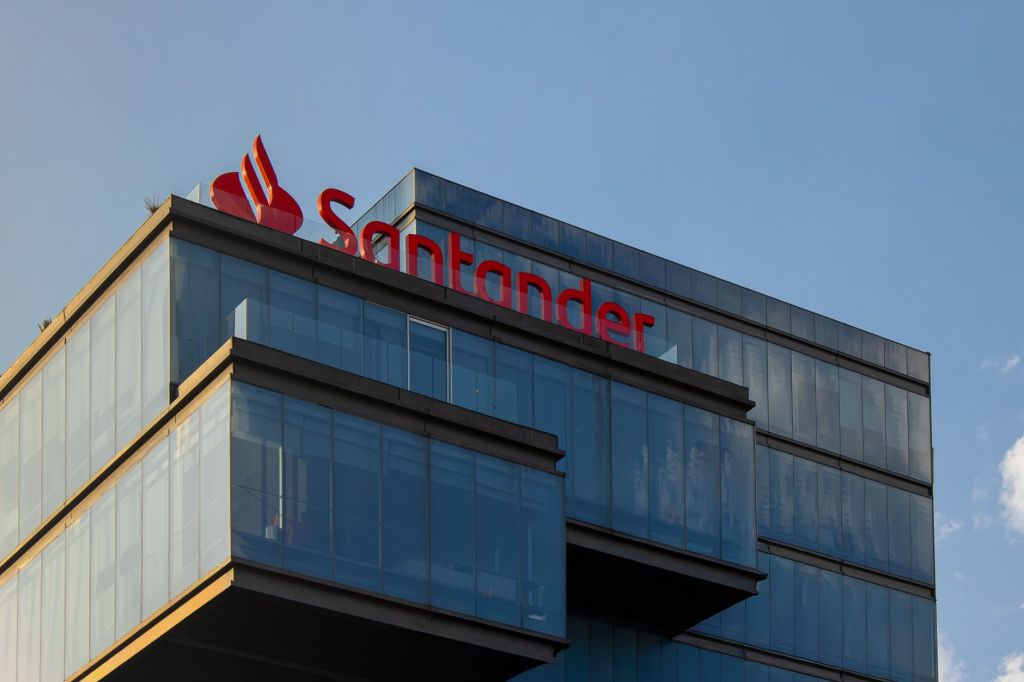
  • Companies Are Finally Putting a Number on AI Gains — Santander Says €194 Million

    Companies Are Finally Putting a Number on AI Gains — Santander Says €194 Million

    Introduction

    For two years, companies have promised that artificial intelligence will make them more efficient and more profitable. Investors kept asking the same question: show me the money.

    In this earnings season, some companies are finally starting to answer — with numbers, even if those numbers are still rough.

    What Happened

    Spanish bank Santander said its AI initiatives generated €194 million (about $216 million) in business value in the first nine months of 2026. The bank reported the figure alongside record underlying profit of €11.18 billion for the same period, up 16% from a year earlier.

    Other companies pointed in the same direction without giving an AI-specific total. Drug maker Novartis reported third-quarter core operating income of $6.04 billion, up 10% at constant currencies, and said AI had begun to improve its bottom line. Standard Chartered reported third-quarter operating income growth of 14% at constant currency, excluding notable items, and said AI tools were helping it scale more efficiently.

    Key figures

    • Santander AI business value, first nine months of 2026: €194 million (about $216 million)
    • Santander underlying profit, same period: €11.18 billion, up 16%
    • Novartis Q3 core operating income: $6.04 billion, up 10% at constant currencies
    • Standard Chartered Q3 operating income growth: 14% at constant currency, excluding notable items
    • Global corporate AI investment in 2025: $581.7 billion, up 130% from the prior year (Stanford HAI 2026 AI Index)

    Why It Happened

    Santander’s chief financial officer, José García Cantera, said AI is helping the bank cut low-value tasks so employees can focus on higher-value work. That affects both revenue and costs, he said — the first quarter, in his words, where the bank could directly link a positive contribution to AI.

    But there is an important warning attached to the number. Santander’s €194 million is a company-defined measure, not a standard accounting figure. It combines extra revenue, cost savings and lower loan-loss provisions from its data and AI programmes, and it was not audited as a separate measure. In other words, it is the bank’s own best estimate, not a figure every company calculates the same way.

    That is why comparisons are tricky. Meta linked AI to stronger advertising growth but gave no AI-only revenue figure. Alphabet’s Google Cloud revenue jumped 103% to $30.71 billion, helped by AI demand, but that is a whole business line, not an AI profit number. And not every company is seeing gains yet: brewer Carlsberg said this week it is not seeing AI benefits at scale, even though the technology has affected costs, pricing and marketing.

    Why It Matters

    The €194 million matters less as a precise profit count and more as a sign of a shift. Companies are moving from talking about AI pilots to trying to measure AI in their accounts. Investors have been worried that AI spending — $581.7 billion globally in 2025 alone — is growing faster than AI returns. Even small, honest numbers help answer that worry.

    At the same time, the different yardsticks are a reason to stay careful. When every company measures AI differently, a big number from one firm cannot be directly compared with a vague claim from another.

    What Happens Next

    Expect more companies to publish AI numbers in the next few earnings seasons, and expect analysts to push them on how those numbers are calculated. The useful question is not just ‘how much did AI add?’ but ‘how did you count it, and would another company count it the same way?’

    Santander itself has set a bigger target: its chair has said AI should help grow annual revenue by about €300 million and cut costs by about €700 million by 2028. That gives investors something concrete to check against in future reports.

    Final Thoughts

    AI is starting to show up in earnings, not just in presentations. Santander’s €194 million is a first step, not a final proof. The companies that win trust will be the ones that explain their numbers clearly — and keep reporting them, good quarter or bad.

    Related: Anthropic IPO, Nasdaq and AI spending worries

    Disclaimer: This article is for educational and informational purposes only and does not constitute financial advice.

    Sources: CNBC, https://www.cnbc.com/2026/11/01/ai-investments-company-earnings.html; Santander results as reported by Kalkine, https://kalkine.com/news/announcements/santander-posts-112bn-underlying-profit-for-first-nine-months-of-2026; AI gains summary as reported by Political.org, https://political.org/2026/10/31/santander-novartis-cite-first-measurable-ai-gains-in-third-quarter-earnings-as-investors-demand-returns/

  • AI Is Helping Meta Sell More Ads — While Google Search Growth Slows to 12%

    AI Is Helping Meta Sell More Ads — While Google Search Growth Slows to 12%

    Introduction

    Two of the biggest advertising companies in the world just reported very different quarters. Meta’s advertising business is growing fast, helped by artificial intelligence. Google’s search business is still growing, but more slowly — and AI is part of the reason.

    What Happened

    Meta reported $63.1 billion in advertising revenue for the third quarter of 2026, up 26% from a year earlier. Total company revenue was $64.6 billion, also up 26%. The number of ads people saw rose 10%, and the average price of an ad rose 14%.

    Alphabet, Google’s parent company, reported $127.6 billion in total revenue, up 25%. But Google Search and other revenue grew 12% to $63.35 billion. That is solid growth in normal terms, yet it is clearly slower than Meta’s advertising growth — and slower than Google’s own search growth in recent quarters.

    Key figures

    • Meta advertising revenue: $63.1 billion, up 26%
    • Meta ad impressions: up 10%; average ad price: up 14%
    • Meta total revenue: $64.6 billion, up 26%
    • Google Search and other revenue: $63.35 billion, up 12%
    • Alphabet total revenue: $127.6 billion, up 25%
    • Google Cloud revenue: $30.71 billion, up 103%

    Why It Happened

    Meta says AI is making its ads work better. When ads are shown to people who are more likely to be interested, advertisers are willing to pay more, and more of those ads lead to a sale or a sign-up. Meta also pointed to more user engagement across Facebook, Instagram and its other apps.

    Google’s story is more mixed. Alphabet said search query growth was the fastest in five years, helped by AI. But more questions do not automatically mean more advertising money. Google’s chief business officer said AI Mode searches — where an AI answer appears instead of a simple list of links — currently bring in less advertising revenue than a traditional search. Foreign exchange was also the largest single factor in the slowdown, the company said.

    In plain terms: people are searching more, but the new kind of search is harder to turn into ad money, at least for now.

    Why It Matters

    Advertising pays for most of what these companies offer for free. If Meta can keep improving ad performance with AI, it has a strong engine for profit, even while it spends heavily on AI data centres. Meta guided fourth-quarter revenue to between $73 billion and $76 billion.

    For Google, the question is different. Search is still a huge business — $63.35 billion in one quarter is enormous. But investors are watching closely: can Google make AI search pay as well as old-fashioned search did? Google only started showing ads alongside AI Mode searches worldwide on October 29, so that part of the story is just beginning.

    What Happens Next

    Watch two things. First, whether Meta’s ad prices keep rising without scaring advertisers away. Second, whether Google’s AI Mode advertising starts to close the gap between fast query growth and slower revenue growth. The next earnings reports will give a clearer answer.

    Final Thoughts

    AI is not helping every big tech company in the same way. Right now, it is boosting Meta’s core business directly. For Google, AI is bringing more users and more questions, but the money side is still catching up. That difference explains a lot about how these two giants are being judged today.

    Related: Why Google Stock Crashed 12.6%: What Investors Need to Know

    Disclaimer: This article is for educational and informational purposes only and does not constitute financial advice.

    Sources: CNBC, https://www.cnbc.com/2026/11/01/ai-meta-ads-google-search.html ; Meta Q3 2026 results as reported by Exchange4Media, https://www.exchange4media.com/digital-news/metas-ad-revenue-jumps-26-to-631-billion-as-ai-boosts-conversions-ad-prices-159351.html ; Alphabet Q3 2026 results as reported by NeoTeo, https://www.neoteo.com/en/alphabets-q3-2026-results-search-and-cloud-grow-free-cash-flow-is-negative

  • Coinbase Made $719 Million in Profit — but Almost All of It Came From Crypto Gains

    Coinbase Made $719 Million in Profit — but Almost All of It Came From Crypto Gains

    Coinbase, America’s biggest listed crypto exchange, reported a $719 million profit for the third quarter of 2026. That sounds like a great quarter — until you look one line deeper. Almost all of that profit, $715 million, came from gains on crypto the company itself holds as an investment. Strip those gains out, and the core business earned just $78 million. That difference is the real story of Coinbase’s quarter.

    What Happened

    Coinbase reported third-quarter results on 29 October 2026, for the three months ended 30 September 2026. Headline net income was $719 million, reversing two consecutive quarterly losses and up from $433 million a year earlier. Earnings per share came in at $2.51, compared with expectations of a loss, according to company coverage.

    Under accounting rules Coinbase adopted, Bitcoin and Ether it holds on its own balance sheet are marked to market every quarter — if their prices rise, the gain flows straight into reported profit, even if Coinbase did not sell anything. Coinbase started with $718.7 million of net income, backed out a $715 million gain on crypto held for investment and a $39.2 million gain on other investments, then added back tax effects to land at $77.7 million of adjusted net income, rounded to $78 million. In plain terms: about 99% of headline profit was a paper gain on crypto Coinbase already owned, not fees collected from customers.

    Why It Happened

    The quarter itself was softer for crypto trading. Total revenue was $1.22 billion, flat from the previous quarter but 35% below the same period last year, as overall crypto market spot trading volume fell about 10%. Transaction revenue — fees from people trading — was $590 million. Subscription and services revenue grew 3% from the previous quarter to $570 million, making up 49% of net revenue, including stablecoin revenue up 5% to $307 million and other services less dependent on daily trading.

    Average USDC held in Coinbase products reached $22 billion, another all-time high and the fourteenth consecutive quarter of records, up 49% from a year ago. Coinbase’s share of global crypto trading volume reached 10.7%, its fourth consecutive quarterly gain. Prediction markets passed $200 million in annualised revenue, becoming one of the fastest-growing products in the company’s history, and Coinbase One subscribers hit an all-time high, up 24% year over year. Adjusted EBITDA was $333 million, up 60% from the previous quarter and the company’s fifteenth consecutive quarter of positive adjusted EBITDA, down from $801 million a year ago — a genuine sign of operating discipline.

    Why It Matters

    A big headline profit does not always mean the underlying business had a big quarter; sometimes assets a company holds simply went up in price. For Coinbase, the shift toward subscriptions, stablecoins and prediction markets matters more long-term than one quarter’s paper gain, because those revenues are steadier than trading fees. Timing also matters: just days after these results, crypto stocks sold off sharply following the Binance hack, with Coinbase among the fallers — about industry confidence, not Coinbase’s own results — showing how quickly sentiment can change in crypto.

    What Happens Next

    Coinbase gave an early look at the current quarter: transaction revenue through 25 October 2026 was approximately $165 million, and it guided subscription and services revenue to $550 million to $630 million for the fourth quarter. Investors will watch whether trading activity recovers after the Binance shock, whether USDC balances keep growing, and whether prediction markets continue fast growth. They will also watch the same accounting effect in reverse: if crypto prices fall in the fourth quarter, paper gains could turn into paper losses and drag headline profit down even if the operating business is steady.

    Final Thoughts

    Coinbase did not have a bad quarter — it made money, grew market share, and kept steadier businesses growing — but calling it a $719 million success story without the footnote would be misleading. The honest version: Coinbase’s core business earned $78 million, operating profit improved a lot from the previous quarter, and a $715 million rise in the value of crypto it holds did most of the work on the headline number. Understanding that difference separates reading a headline from understanding a company.

    Key figures:

    • Net income: $719 million (Q3 2026)
    • Gain on crypto held for investment: $715 million
    • Adjusted net income: $78 million
    • Adjusted EBITDA: $333 million, up 60% quarter over quarter
    • Total revenue: $1.22 billion, flat quarter over quarter, down 35% year over year
    • Subscription and services revenue: $570 million (49% of net revenue)
    • Average USDC held: $22 billion, up 49% year over year
    • Global trading market share: 10.7%

    Disclaimer: This article is for educational and informational purposes only and does not constitute financial advice.

    Sources: Coinbase Q3 2026 earnings announcement (October 29, 2026); Motley Fool earnings coverage and call transcript (October 29-30, 2026).

  • Apple and Palantir Report Monday in a Huge Week for Stocks, Elections and Jobs

    Apple and Palantir Report Monday in a Huge Week for Stocks, Elections and Jobs

    After a brutal week for tech stocks, the next five days could decide whether the sell-off continues or starts to calm down. Apple and Palantir report earnings on Monday, Americans vote in midterm elections on Tuesday, and the October jobs report arrives on Friday. In between, more than 100 big companies report results.

    Here is what to watch, day by day, in plain terms.

    What Happened Last Week

    On Friday, October 30, 2026, the Nasdaq fell 2.86% to 25,437.00, its worst day since June. The S&P 500 fell 1.82% to 7,580.07 and the Dow dropped 1.09% to 51,770.31. For the full week, the S&P 500 lost 0.58%, the Nasdaq fell 2% and the Dow gave up 0.85%.

    The main trigger was earnings: Amazon and Intel disappointed investors, Alphabet had already fallen sharply, and worries about how much tech companies are spending on AI spread across the whole sector. The semiconductor ETF SOXX dropped 9.1% on Friday alone.

    CNBC host Jim Cramer summed up the mood on Friday: “After a brutal week for tech, don’t assume the worst is behind us.” He pointed to the election, uncertainty overseas, the jobs report and another wave of earnings as reasons to stay careful.

    Monday, November 2: Apple and Palantir

    Apple reports after the market closes on Monday, the biggest name of the week. Analysts expect earnings of about $1.98 per share on revenue of about $113.3 billion, up roughly 11% from a year ago. iPhone revenue alone is expected to be around $56.5 billion, about half of total sales. Apple shares recently hit an all-time high, helped by enthusiasm for its latest products, and the stock trades at almost 40 times earnings, so there is very little room for disappointment.

    Palantir also reports Monday after the close. Analysts expect earnings of about $0.41 per share on revenue of about $2.18 billion, up more than 80% from a year ago. Cramer said he expects encouraging results, citing strong customer feedback about Palantir’s AI software. Other companies reporting Monday include Marriott, Vertex and ON Semiconductor.

    Tuesday, November 3: Elections and AMD

    Americans vote in midterm elections, with 35 Senate seats on the ballot, and AMD reports earnings after the close. AMD is expected to report revenue of about $13.1 billion and earnings of about $1.94 per share, up sharply from a year ago. As a chipmaker selling into the AI boom, its results will be read as a signal for the whole semiconductor sector, especially after Intel’s weak forecast rattled chip stocks last week. Other Tuesday names include Arista, Block, Booking Holdings, Shopify and Pfizer, plus a job openings report.

    Wednesday to Friday: A Packed Finish

    Wednesday, November 4 is the busiest earnings day, with Qualcomm, Uber, McDonald’s, Datadog, Arm, AppLovin and DoorDash among the names reporting, plus private payrolls and services data. Thursday, November 5 brings Atlassian, Cloudflare, Airbnb, ConocoPhillips and Cigna, plus weekly jobless claims and a speech from Cleveland Fed President Beth Hammack.

    Friday, November 6 is the finale: the October jobs report from the Bureau of Labor Statistics at 8:30 a.m. Eastern, shaping expectations for the Federal Reserve’s December decision on interest rates. Moderna and Humana also report Friday. Context from CNBC’s weekly outlook: S&P 500 companies are beating earnings expectations by only 1.4% on average this season, well below the five-year average beat of 7.5%.

    Why It Matters

    There are three kinds of risk in five days — earnings risk (Apple, Palantir and AMD have to prove AI spending is paying off), political risk (midterm results could change what policies are possible in Washington), and economic risk (the jobs report could move interest-rate expectations, affecting everything from mortgages to stock valuations). The practical point is simple: expect big moves in either direction and do not read too much into any single day.

    What Happens Next

    If Apple and Palantir both beat expectations and the jobs report comes in steady, the tech sell-off could start to ease. If Apple disappoints, or jobs data surprises in either direction, volatility is likely to continue. By Friday evening, much more will be known about whether the biggest tech companies can still grow into their high valuations, whether voters changed the political picture, and whether the US job market is still holding up.

    Final Thoughts

    Weeks like this are why investing feels stressful. Focus on actual numbers — revenue, earnings and jobs — rather than noise. By Friday, those numbers will tell a clearer story than any single prediction today.

    Key figures:

    • Apple (Monday): expected EPS about $1.98, revenue about $113.3 billion
    • Palantir (Monday): expected EPS about $0.41, revenue about $2.18 billion
    • AMD (Tuesday): expected EPS about $1.94, revenue about $13.1 billion
    • Friday, October 30: Nasdaq -2.86%, S&P 500 -1.82%, Dow -1.09%
    • Friday jobs report: October employment data, 8:30 a.m. Eastern, November 6

    Disclaimer: This article is for educational and informational purposes only and does not constitute financial advice.

    Sources: CNBC week-ahead outlook as reported by TradingView News (November 1, 2026) and FXEmpire; company earnings expectations via Fiscal.ai data as reported by TradingView.

  • Cognizant Beats Revenue Expectations but Cuts Its 2026 Outlook as Clients Spend Less

    Cognizant Beats Revenue Expectations but Cuts Its 2026 Outlook as Clients Spend Less

    Cognizant reported a solid third quarter, then lowered its outlook for the full year. That combination — good results today, more caution about tomorrow — is why the shares fell after the report.

    The IT services company beat revenue expectations for the September quarter. But it said clients in healthcare and consumer-facing industries are holding back on discretionary spending, especially in the fourth quarter. So it narrowed its 2026 revenue growth forecast.

    What Happened

    Cognizant reported third-quarter 2026 results on October 29. Revenue rose 4.6% from a year earlier to $5.66 billion, or 4.8% in constant currency, which strips out the effect of exchange-rate moves. That was above the Wall Street consensus of $5.65 billion and above the midpoint of the company’s own guidance.

    Adjusted earnings per share, which exclude some one-off items, rose 7.2% to $1.49, above the $1.46 consensus. GAAP earnings per share rose to $1.39 from $0.56 a year earlier. Net profit was $627 million, up from $274 million a year earlier, when profit was hit by a one-time, non-cash tax charge of $390 million.

    Shares fell in premarket trading after the report, dropping 8.65% to $60.62, according to CNBC TV18’s coverage, even though revenue beat expectations. The market was reacting to the outlook, not the quarter itself.

    Why It Happened

    The main reason is discretionary spending. That is the extra work clients choose to start — new projects and upgrades — rather than the essential work they must keep running. When companies feel uncertain about the economy, that extra spending is often the first thing they delay.

    Cognizant chief executive Ravi Kumar said macroeconomic conditions were largely stable in the third quarter, but uncertainty is weighing more on discretionary spending in the fourth quarter, particularly in healthcare and consumer-facing sectors.

    The company also pointed to lower revenue from third-party resales and a bigger impact from holidays and furloughs in the fourth quarter than it had expected.

    Bookings tell a similar story. Bookings in the September quarter fell 7% from a year earlier. Over the trailing 12 months, however, bookings rose 4% to $28.7 billion, and the company signed three large deals in the quarter, each worth more than $100 million in total contract value.

    Key figures

    • Q3 revenue: $5.66 billion, up 4.6% year over year (4.8% in constant currency)
    • Q3 adjusted EPS: $1.49, up 7.2%; GAAP EPS: $1.39, up from $0.56
    • Q3 net profit: $627 million, up from $274 million
    • Operating margin: 15.4%, down 60 basis points; adjusted operating margin: 16.3%, up 30 basis points
    • Full-year 2026 revenue growth guidance: narrowed to 4.0%-4.4% in constant currency, from 4.0%-5.5%
    • Q4 revenue guidance: $5.49 billion to $5.57 billion (3.2%-4.7% constant-currency growth)
    • Trailing 12-month bookings: $28.7 billion, up 4%
    • Workforce: 359,900 at September 30, up 3,200 in the quarter
    • Financial services revenue: up 12% in constant currency

    Why It Matters

    Cognizant’s quarter shows two different forces at work. Its financial services business is growing fast — up 12% in constant currency, its third straight quarter of double-digit growth. Its adjusted profit margin also improved to 16.3%, a four-year high, helped by its Project Leap efficiency programme.

    But the parts of the business tied to healthcare and consumer spending are under pressure from regulatory uncertainty and cautious clients. That split is important for anyone trying to understand IT services right now: banks are still spending on technology, while other industries are waiting.

    The guidance cut is also the third straight quarter in which Cognizant has lowered the top end of its full-year growth forecast. At the start of the year, the top end was 6.5%. Now it is 4.4%. That pattern matters more than any single quarter, because it shows management keeps finding the second half of the year harder than it first expected.

    What Happens Next

    The fourth quarter is the test. Cognizant expects revenue of $5.49 billion to $5.57 billion, which is below the $5.65 billion consensus. If clients restart discretionary projects early in 2027, as management hopes they might if the macro picture stabilises, the growth story could improve. If they do not, analysts may cut 2027 forecasts further.

    Also watch Project Leap. Cognizant now expects total costs of $180 million to $250 million for the programme, down from an earlier $230 million to $320 million estimate, with $140 million to $160 million expected in 2026. The company says the programme should support further margin gains in 2027.

    Final Thoughts

    This was not a bad quarter. Revenue beat expectations, margins improved, and the company kept winning large deals. The problem was the outlook. When a company beats today but guides lower for tomorrow, investors usually focus on tomorrow — and that is exactly what happened here.

    Disclaimer: This article is for educational and informational purposes only and does not constitute financial advice.

    Sources: CNBC TV18, https://www.tradingview.com/news/cnbctv:d111e8a7b094b:0/ ; Cognizant press release via Morningstar, https://www.morningstar.com/news/pr-newswire/20261029ny84050/cognizant-reports-third-quarter-2026-results

    Related reading: AI disruption fears

  • Coca-Cola Raises Its Outlook Again as Global Sales Grow, but US Demand Stays Flat

    Coca-Cola Raises Its Outlook Again as Global Sales Grow, but US Demand Stays Flat

    INTRODUCTION

    Coca-Cola raised its full-year outlook for the third quarter in a row, after stronger-than-expected third-quarter results. The growth came from outside North America. At home, demand stayed flat, a reminder that even the world’s biggest drinks company is feeling pressure from cautious American consumers.

    WHAT HAPPENED

    Coca-Cola reported third-quarter revenue of $13.35 billion, up 7% from a year earlier and above the roughly $12.93 billion analysts expected. Comparable earnings per share came in at $0.91, beating the $0.87 to $0.88 consensus, and up 11% from a year earlier. Net income attributable to shareholders rose to $4.01 billion, from $3.7 billion a year earlier.

    Global unit case volume, which measures how many drinks were sold, rose 5% for the second straight quarter. But volume in North America was unchanged. Growth in trademark Coca-Cola was offset by declines in water, sports drinks, coffee and tea in the region.

    The company now expects comparable earnings per share to grow at least 11% in 2026, up from its earlier forecast of 9% to 10%. It also raised its organic revenue growth outlook to at least 5%, and its free cash flow forecast to at least $13 billion, up from about $12.4 billion.

    WHY IT HAPPENED

    The growth came from international markets. India, China, Mexico and Brazil were among the markets driving volume growth, with Latin America and Asia Pacific each recording 6% volume growth. Coca-Cola Zero Sugar was a standout, with volume up 16% across all regions. Diet Coke and Coca-Cola Light grew 6%.

    North America was flat for specific reasons as well as general ones. Chief executive Henrique Braun pointed to the timing of the Independence Day holiday and a shortage of Topo Chico sparkling water in Texas. More broadly, management said American consumers are still under pressure from inflation and economic uncertainty, and people are spending more at home than in restaurants.

    Importantly, growth came from selling more drinks, not just raising prices. Prices rose only about 1%, while volume rose 5%. That is a healthier kind of growth, because it means more people are actually buying the product.

    KEY FIGURES

    • Revenue: $13.35 billion, up 7%, vs about $12.93 billion expected
    • Comparable earnings per share: $0.91, vs $0.87 to $0.88 expected, up 11%
    • Net income: $4.01 billion, vs $3.7 billion a year earlier
    • Global unit case volume: up 5%
    • North American volume: flat
    • Coca-Cola Zero Sugar volume: up 16%
    • Comparable operating margin: 32.9%, up from 31.9% a year earlier
    • 2026 comparable EPS growth outlook: at least 11%, up from 9% to 10%
    • 2026 organic revenue growth outlook: at least 5%
    • 2026 free cash flow outlook: at least $13 billion, up from about $12.4 billion

    WHY IT MATTERS

    Coca-Cola is often seen as a test of the everyday consumer. People buy a Coke when they feel they can afford a small treat. When global sales grow but American sales stall, it tells two stories at once: demand in fast-growing markets is strong, but American shoppers are still being careful.

    The result also matters because Coca-Cola raised its outlook for the third straight quarter. Companies rarely do that unless the underlying business is genuinely improving. At the same time, the flat North American result, and a warning that consumer pressure could last into 2027, kept the share reaction muted. Shares actually fell about 1.6% on the day, showing that investors were more focused on the weak spot than the raised forecast.

    WHAT HAPPENS NEXT

    The fourth quarter will be tougher on paper. Management warned it will have six fewer days, some destocking by bottlers, and higher logistics and transport costs, including pricier packaging materials such as aluminium and PET plastic. Those are real headwinds for hitting the raised targets.

    Watch two things in the next report: whether North American volume starts growing again, and whether Coca-Cola can hold its improved profit margin while absorbing higher costs. If international growth stays strong and the US recovers even a little, the raised outlook looks safe. If the US stays flat and costs keep rising, the company will have to lean even harder on its overseas markets.

    FINAL THOUGHTS

    This was a good quarter with a clear weak spot. Coca-Cola sold more drinks around the world, made more profit per sale, and felt confident enough to raise its forecast again. But its home market is not growing, and that is the part investors will keep watching. For a company this big, the difference between flat and growing in America is the difference between a good year and a great one.

    Related post: https://thefinanceclass.wordpress.com/2026/10/30/starbucks-profit-beat-revenue-miss-us-recovery/

    Disclaimer: This article is for educational and informational purposes only and does not constitute financial advice.

    Sources: CNBC, https://www.cnbc.com/2026/10/27/coca-cola-ko-q3-2026-earnings.html; Sharecast, https://www.sharecast.com/news/international-companies/coca-cola-nyse-dow-jones-new-york-stocks-equities-snacks-beverages–23931349.html

  • Boeing Stock Falls About 9% as 737 Max Ramp-Up Slips to Late 2027

    Boeing Stock Falls About 9% as 737 Max Ramp-Up Slips to Late 2027

    INTRODUCTION

    Boeing had good news and bad news in its third-quarter results, and investors focused on the bad news. The company narrowed its loss sharply and grew revenue, but its shares fell about 9% during its earnings call. The reason was simple: Boeing said it will not significantly ramp up production of its best-selling 737 Max plane until the second half of 2027.

    WHAT HAPPENED

    Boeing reported a third-quarter net loss of $116 million, or 26 cents per share, compared with a $5.34 billion loss, or $7.14 per share, a year earlier. Revenue rose 4% to $24.19 billion, above the $23.84 billion analysts expected. Free cash flow rose to $464 million, up from $238 million a year earlier.

    But the adjusted loss per share, which strips out one-off items, was 34 cents, wider than the 21-cent loss analysts expected. And chief executive Kelly Ortberg said on the earnings call that Boeing is targeting a production rate of 52 planes a month only in the second half of 2027. The company is currently making about 47 Max planes a month.

    WHY IT HAPPENED

    The delay comes down to wings. Boeing has said that wing production is moving more slowly than expected, and stabilising production is taking longer than planned. Ortberg told CNBC that the company wants to get production right rather than go fast, saying, in effect, that everyone wants it to move faster but it will do the job properly.

    The commercial aircraft business also struggled. Its revenue fell 3% to $10.72 billion, and it posted a negative operating margin of 6.5%, which Boeing blamed on a less favourable mix of deliveries, higher expected costs from future production changes, and higher supply chain costs. Boeing delivered 161 commercial airplanes in the quarter, just one more than a year earlier.

    The defence business was the bright spot. Defence revenue jumped 15% to $7.94 billion, which helped narrow the overall loss.

    KEY FIGURES

    • Third-quarter net loss: $116 million, vs $5.34 billion a year earlier
    • Revenue: $24.19 billion, up 4%, vs $23.84 billion expected
    • Adjusted loss per share: 34 cents, vs 21 cents expected
    • Free cash flow: $464 million, vs $238 million a year earlier
    • Commercial aircraft revenue: $10.72 billion, down 3%
    • Commercial airplanes delivered: 161
    • Defence revenue: $7.94 billion, up 15%
    • 737 Max production now: about 47 a month; target: 52 a month in the second half of 2027
    • Shares: down about 9% during the earnings call

    WHY IT MATTERS

    Boeing only makes most of its money on a plane when it delivers it to an airline. That is why production speed matters so much. A delay of several months in ramping up from 47 to 52 planes a month means fewer deliveries, less cash coming in, and a slower recovery.

    It also matters for airlines. Many airlines are waiting for new 737 Max planes to grow their fleets and replace older aircraft. If Boeing delivers more slowly, airlines may have to keep older planes flying longer or wait longer to add routes.

    WHAT HAPPENS NEXT

    There was one piece of good regulatory news. The Federal Aviation Administration signed off on the 737 Max 10, after approving the 737 Max 7 in August. Those were the final certifications for the Max family. But certification is not the same as delivery, and Boeing still needs to prove it can build planes steadily at higher rates without quality problems.

    Investors will now watch three things: whether Boeing can stabilise production at 47 planes a month, whether wing output improves, and whether free cash flow keeps growing. Boeing expects to deliver 30 pre-built 737-7 and 737-10 aircraft starting in 2027, which could help cash flow in 2028 and beyond. But that is still a long way off.

    FINAL THOUGHTS

    Boeing’s quarter shows a company making real progress and still disappointing the market at the same time. The loss is much smaller, revenue beat expectations, and cash flow improved. But in the aircraft business, promises about future production matter as much as today’s numbers. Until Boeing can show it can build planes faster, and safely, investors will keep treating every delay as a reason to sell.

    Related post: https://thefinanceclass.wordpress.com/2026/10/30/ford-beats-earnings-2027-profit-flat-costs/

    Disclaimer: This article is for educational and informational purposes only and does not constitute financial advice.

    Sources: CNBC, https://www.cnbc.com/2026/10/27/-boeing-ba-q3-2026-earnings.html; PrimeXBT, https://primexbt.com/news/boeing-stock-falls-9-as-737-max-ramp-up-slips-to-late-2027/

Is this your new site? Log in to activate admin features and dismiss this message
Log In