Introduction
Anthropic is a young AI company.
It is best known for Claude.
Claude is a family of AI models.
On Monday, November 2, Anthropic shared new money numbers.
The numbers came in a new filing for its stock market listing.
The filing is called an S-1.
An S-1 is a form a company files when it wants to sell shares to the public.
A share means a small piece of a company.
The new filing adds the third quarter of 2026.
The first filing covered only the first half of the year.
What Happened
Anthropic made about $17 billion in the third quarter.
Revenue means money a company earns from selling its products or services.
That is a huge jump.
For the first nine months of 2026, revenue was $33.24 billion.
That is up about 1,200% from the same period last year.
But Anthropic still lost a lot of money.
A loss means a company spends more than it earns.
Its net loss for the nine months was $104 billion.
The same period last year had a loss of $25.1 billion.
The third quarter alone had a loss of $23.29 billion.
Most of the nine-month loss came from paper changes.
These were changes in the value of loans that can turn into shares.
That is not the same as cash leaving the bank in the same way.
Still, the loss is very large.
It shows how costly AI can be.
Key figures
Third-quarter revenue: about $17 billion
Nine-month revenue: $33.24 billion, up about 1,200% from a year earlier
Nine-month net loss: $104 billion
Third-quarter net loss: $23.29 billion
Future purchase commitments: $895.4 billion
Prior-year nine-month net loss: $25.1 billion
Why It Happened
Anthropic sells AI mainly to big business customers.
Businesses pay to use Claude for work tasks.
Demand for AI has grown very fast.
That growth pushed revenue up.
But AI also needs huge computers.
It needs data centres.
A data centre is a big building full of computers.
It needs chips and power too.
Anthropic promised to pay for much of that in the future.
A commitment means money promised to pay later.
Its total commitments are $895.4 billion.
Almost all of that is for computers and buildings.
That is why the future bill is so big.
Why It Matters
This filing tells two stories at once.
One story is fast growth.
Revenue jumped from a small base to tens of billions.
The other story is huge cost.
Anthropic must spend for years to keep growing.
Investors must ask a simple question.
Will future sales be big enough to pay those future bills?
The answer is not clear yet.
That is why this IPO will be watched so closely.
An IPO means a first sale of shares to the public.
Anthropic is only five years old.
A listing this large would be historic.
What Happens Next
Watch for the next steps in the IPO.
Watch for the share price range.
That range has not been set yet.
Watch also for news on customers.
If big customers stay, revenue may keep growing.
If costs grow faster, losses may stay large.
Both sides matter for this company.
Final Thoughts
Anthropic is growing at a rare speed.
It is also promising a rare amount of future spending.
Fast growth and big bills now live in the same filing.
Investors will have to weigh both.
Disclaimer: This article is for educational and informational purposes only and does not constitute financial advice.
Sources: CNBC, https://www.cnbc.com/2026/11/02/anthropic-ant-s-1-quarter-financials.html ; Anthropic S-1 coverage, https://cryptobriefing.com/anthropic-ipo-filing-900-billion-commitments/
Related post: https://thefinanceclass.wordpress.com/2026/10/31/anthropic-ipo-nasdaq-rockier-ai-spending-worries/
Category: Technology
-
Anthropic Made About $17 Billion in Q3 as Its Future Bills Hit $895.4 Billion
-

South Korea Plans a Record Budget to Build Its Own Top AI Model
Introduction
South Korea wants to spend big on AI.
President Lee Jae Myung shared a new budget plan on Monday, November 2.
The plan is for 2027.
It is the largest budget in the country’s history.
It puts huge money into AI, chips, and data centres.
It also funds a home-grown AI model.
A sovereign AI model means a model made and controlled in its own country.
What Happened
Total spending would rise 12.8% to 820.9 trillion won.
Won is the money of South Korea.
That total is about $610 billion.
AI, chips, physical AI, and data centres would get 21.3 trillion won.
That is about $16 billion.
It is nearly double the 2026 level.
Physical AI means smart machines that work in the real world.
Think robots and self-driving machines.
A separate 4.7 trillion won would go to frontier AI projects.
Frontier means the most advanced work.
That includes South Korea’s own AI model.
The goal is the world’s highest performance.
Defence spending would rise 8.2% to 73.3 trillion won.
The plan must still pass the National Assembly.
The National Assembly is South Korea’s parliament.
Its deadline is December 2.
Key figures
Total 2027 budget plan: 820.9 trillion won, about $610 billion
Rise from 2026: 12.8%
AI, chips, physical AI and data centres: 21.3 trillion won, about $16 billion
2026 level for those areas: 10.8 trillion won
Frontier AI and home-grown model: 4.7 trillion won
Defence spending: 73.3 trillion won, up 8.2%
Parliament deadline: December 2, 2026
Why It Happened
South Korea is riding a chip boom.
Chips are tiny parts that run computers and phones.
Strong chip sales brought in more tax money.
The government wants to use that money for future growth.
It wants to train 2,000 chip design experts too.
It wants to build chip factories and data centres.
It also wants its own AI model.
Right now, the best models come from a few firms abroad.
South Korea wants more control over its own AI.
That is the idea behind a sovereign model.
Why It Matters
This plan is a bet on the future.
It bets that AI and chips will drive growth for years.
It also bets that public money can speed that growth.
But a budget plan is not yet a law.
Parliament can change it.
It can cut some projects.
It can add others.
The money is also huge.
Critics will ask if it is spent well.
They will ask if buying foreign AI would be cheaper.
Those questions will shape the debate.
What Happens Next
Watch parliament first.
Will it pass the plan by December 2?
Watch which projects survive.
Watch also for news on chip factories.
New factories take years to build.
Watch for news on the home-grown model.
A top model needs chips, power, and skilled people.
All three take time.
Final Thoughts
South Korea is not just watching the AI race.
It is paying to join it at the front.
A record budget shows that intent.
Now parliament must decide if the plan becomes real.
Disclaimer: This article is for educational and informational purposes only and does not constitute financial advice.
Sources: CNBC, https://www.cnbc.com/2026/11/02/south-korea-ai-spending-budget.html ; Aju Press, https://www.ajupress.com//view/20261102111057061 ; Reuters via Asia Daily, https://asiadaily.org/news/17208/
Related post: https://thefinanceclass.wordpress.com/2026/11/01/south-korea-exports-nearly-double-october-ai-chip-demand/ -

Oracle Plans to Raise $20 Billion in Shares and Bonds for Its AI Buildout
Introduction
Oracle wants $20 billion from investors.
It filed papers on Monday, November 2.
Half will come from new shares.
Half will come from new bonds.
A bond is a loan from investors.
The company pays the loan back later.
Oracle wants the money for AI and cloud work.
Cloud means computer services used over the internet.
Investors did not cheer the news.
Oracle shares fell about 4% before the market opened.
What Happened
Oracle will sell $10 billion in new bonds.
It will also sell $10 billion in new shares.
The bond sale has six parts.
They mature between 2029 and 2046.
Mature means the date the loan must be paid back.
Interest rates and prices are not set yet.
Oracle said the money is for general company use.
That can include building, paying debt, buying firms, paying dividends, and buying back shares.
A dividend is money a company pays to its owners.
Oracle shares fell about 4% in early trading on Monday.
Through Friday, the shares were down about 33% this year.
Key figures
Total amount to raise: $20 billion
New bonds: $10 billion, in six parts
New shares: $10 billion
Bond maturity dates: 2029 to 2046
Share fall in early Monday trading: about 4%
Share fall this year through Friday: about 33%
Money owed in notes and borrowings on August 31: $125.34 billion
Fiscal 2026 revenue: $67.36 billion
Revenue goal for fiscal 2030: more than $225 billion
Why It Happened
AI needs huge buildings and computers.
Oracle is building cloud capacity for AI.
That work costs a lot of money.
Oracle said last week that building costs will peak soon.
It said costs will peak in fiscal 2027 and fiscal 2028.
It also promised to limit new borrowing.
It said it would raise no more than $20 billion more for AI through fiscal 2030.
This $20 billion plan fits that promise.
Oracle also lacks the size of rivals Microsoft and Amazon in cloud.
Investors worry about that gap.
They also worry about Oracle’s link to OpenAI.
OpenAI is the maker of ChatGPT.
It is a loss-making company.
Why It Matters
This deal shows how costly AI has become.
Even a huge firm like Oracle must ask investors for more money.
Selling shares can dilute old owners.
Dilute means each old share becomes a smaller piece of the firm.
Selling bonds adds debt.
Debt means money that must be paid back.
Oracle hopes AI revenue will grow fast enough to pay for all this.
It wants revenue to more than triple by fiscal 2030.
That is a bold goal.
It is not a promise that it will happen.
What Happens Next
Watch the final prices for the bonds and shares.
Watch how investors react after the sale.
Watch Oracle’s building costs next.
If costs peak as promised, worry may ease.
If costs keep rising, worry may grow.
Watch also for news on OpenAI.
Its spending affects Oracle too.
Final Thoughts
Oracle is asking for $20 billion.
It is a big ask.
It is also a clear sign.
AI buildings are costly, even for giants.
Now Oracle must show the spending will pay off.
Disclaimer: This article is for educational and informational purposes only and does not constitute financial advice.
Sources: CNBC, https://www.cnbc.com/2026/11/02/oracle-files-to-sell-20-billion-in-new-stock-bonds-to-finance-ai-buildout.html ; Reuters, https://srnnews.com/oracle-plans-to-raise-20-billion-through-bonds-and-stock-sales/
Related post: https://thefinanceclass.wordpress.com/2026/11/02/marvell-buy-lumentum-115-billion-ai-deal/ -
Marvell Will Buy Lumentum in a $115 Billion Deal to Power AI Data Centres
Introduction
Marvell will buy Lumentum. The deal is worth $115 billion in total value. It is one of the biggest deals of 2026. Both firms work on parts that help computers talk to each other. Now they want to do that work together, for AI data centres.What Happened
Marvell Technology and Lumentum made a deal on Monday, November 2. Marvell will buy Lumentum in an all-stock deal. All-stock means Marvell pays with its own shares, not with cash. A share means a small piece of a company. Lumentum owners will get 4.5 Marvell shares for each Lumentum share they own. That works out to about $1,132 for each Lumentum share. That price is about 23.9% higher than Lumentum’s price on October 28. October 28 was the last day before news of a possible deal came out. A premium means extra money above the old price. After the deal closes, Marvell owners will own about 67% of the new firm. Lumentum owners will own about 33%. Both boards said yes to the deal. The deal should close in the first half of 2028. It still needs yes votes from owners and from regulators. A regulator is a group that checks big deals follow the rules. Marvell shares rose about 2.8% in early trading on Monday. Trading in Lumentum shares was paused for a time.Key figures
- Total deal value: $115 billion
- Price for each Lumentum share: about $1,132
- Premium above the October 28 price: about 23.9%
- Shares Marvell owners will hold after: about 67%
- Shares Lumentum owners will hold after: about 33%
- Size of the market they can sell to: about $550 billion
- Money they hope to save each year by working together: more than $1 billion
- Lumentum first-quarter revenue: $1.26 billion, just above the $1.25 billion people expected
Why It Happened
AI data centres need very fast links. A data centre is a big building full of computers. These computers must share huge amounts of data, very fast. Marvell makes chips and electrical links. Lumentum makes lasers and light-based parts. Light-based parts move data with light, not with wires alone. Light can move data very fast. Put together, the two firms can sell a fuller set of links for AI. Marvell boss Matt Murphy will stay as boss of the new firm. Lumentum boss Michael Hurlston will join Marvell’s board. A board is a small group that helps run a company.Why It Matters
AI firms are spending huge sums on data centres. They need faster links to make AI work well. This deal is a big bet that this need will keep growing. It is also Marvell’s biggest buy since its $10 billion Inphi deal in 2021. It will make Marvell a stronger rival to Broadcom, a bigger chip firm. But a big deal is not a sure win. The firms must join their teams and products with care. They must also pass checks by regulators.What Happens Next
Owners and regulators will look at the deal next. That work will take many months. The close is not expected until the first half of 2028. Watch for news on approvals. Watch also for news on how the firms join their work. If the deal closes, the new firm will be a major seller of AI links.Final Thoughts
This is a simple idea, on a very big scale. Two firms that make link parts want to become one stronger firm. AI made that idea worth $115 billion. Now they must show they can make it work.Disclaimer: This article is for educational and informational purposes only and does not constitute financial advice.
Sources: CNBC, https://www.cnbc.com/2026/11/02/marvel-to-buy-lumentum-in-115-billion-deal-in-ai-data-center-bet.html ;Marvell announcement, https://investor.marvell.com/news-events/press-releases/detail/1040/marvell-and-lumentum-to-combine-creating-a-category-leader-in-ai-connectivity ; Reuters report, https://kelofm.com/2026/11/02/marvell-to-buy-lumentum-in-115-billion-deal-in-ai-data-center-bet/
Related post: https://thefinanceclass.wordpress.com/2026/11/01/ai-meta-ads-google-search-growth/
-
Companies Are Finally Putting a Number on AI Gains — Santander Says €194 Million
Introduction
For two years, companies have promised that artificial intelligence will make them more efficient and more profitable. Investors kept asking the same question: show me the money.
In this earnings season, some companies are finally starting to answer — with numbers, even if those numbers are still rough.
What Happened
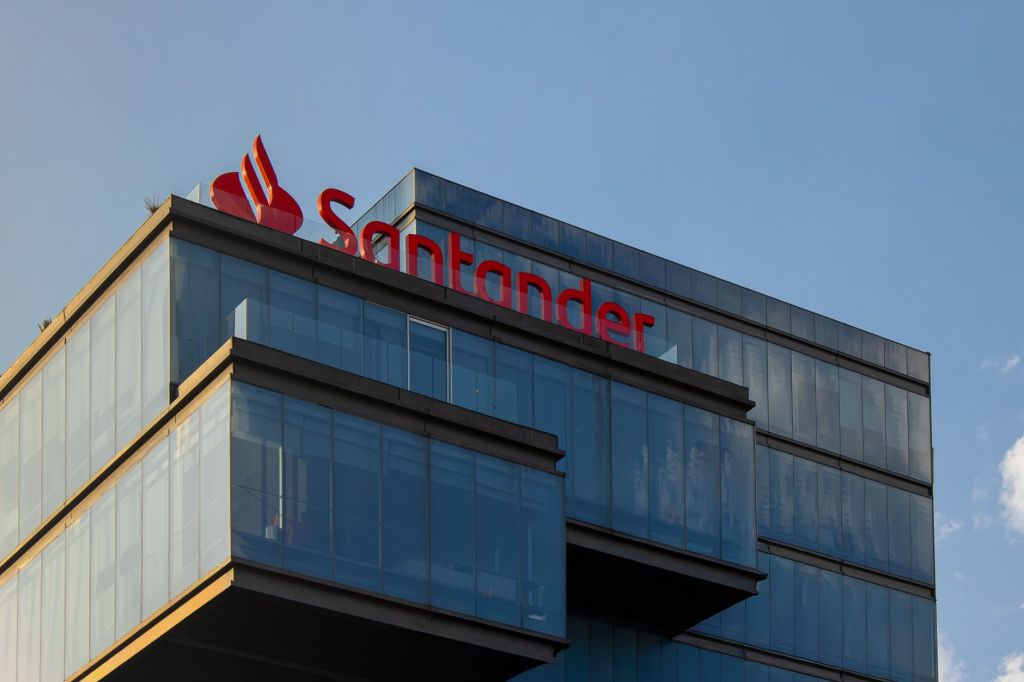
Spanish bank Santander said its AI initiatives generated €194 million (about $216 million) in business value in the first nine months of 2026. The bank reported the figure alongside record underlying profit of €11.18 billion for the same period, up 16% from a year earlier.
Other companies pointed in the same direction without giving an AI-specific total. Drug maker Novartis reported third-quarter core operating income of $6.04 billion, up 10% at constant currencies, and said AI had begun to improve its bottom line. Standard Chartered reported third-quarter operating income growth of 14% at constant currency, excluding notable items, and said AI tools were helping it scale more efficiently.
Key figures
- Santander AI business value, first nine months of 2026: €194 million (about $216 million)
- Santander underlying profit, same period: €11.18 billion, up 16%
- Novartis Q3 core operating income: $6.04 billion, up 10% at constant currencies
- Standard Chartered Q3 operating income growth: 14% at constant currency, excluding notable items
- Global corporate AI investment in 2025: $581.7 billion, up 130% from the prior year (Stanford HAI 2026 AI Index)
Why It Happened
Santander’s chief financial officer, José García Cantera, said AI is helping the bank cut low-value tasks so employees can focus on higher-value work. That affects both revenue and costs, he said — the first quarter, in his words, where the bank could directly link a positive contribution to AI.
But there is an important warning attached to the number. Santander’s €194 million is a company-defined measure, not a standard accounting figure. It combines extra revenue, cost savings and lower loan-loss provisions from its data and AI programmes, and it was not audited as a separate measure. In other words, it is the bank’s own best estimate, not a figure every company calculates the same way.
That is why comparisons are tricky. Meta linked AI to stronger advertising growth but gave no AI-only revenue figure. Alphabet’s Google Cloud revenue jumped 103% to $30.71 billion, helped by AI demand, but that is a whole business line, not an AI profit number. And not every company is seeing gains yet: brewer Carlsberg said this week it is not seeing AI benefits at scale, even though the technology has affected costs, pricing and marketing.
Why It Matters
The €194 million matters less as a precise profit count and more as a sign of a shift. Companies are moving from talking about AI pilots to trying to measure AI in their accounts. Investors have been worried that AI spending — $581.7 billion globally in 2025 alone — is growing faster than AI returns. Even small, honest numbers help answer that worry.
At the same time, the different yardsticks are a reason to stay careful. When every company measures AI differently, a big number from one firm cannot be directly compared with a vague claim from another.
What Happens Next
Expect more companies to publish AI numbers in the next few earnings seasons, and expect analysts to push them on how those numbers are calculated. The useful question is not just ‘how much did AI add?’ but ‘how did you count it, and would another company count it the same way?’
Santander itself has set a bigger target: its chair has said AI should help grow annual revenue by about €300 million and cut costs by about €700 million by 2028. That gives investors something concrete to check against in future reports.
Final Thoughts
AI is starting to show up in earnings, not just in presentations. Santander’s €194 million is a first step, not a final proof. The companies that win trust will be the ones that explain their numbers clearly — and keep reporting them, good quarter or bad.
Related: Anthropic IPO, Nasdaq and AI spending worries
Disclaimer: This article is for educational and informational purposes only and does not constitute financial advice.
Sources: CNBC, https://www.cnbc.com/2026/11/01/ai-investments-company-earnings.html; Santander results as reported by Kalkine, https://kalkine.com/news/announcements/santander-posts-112bn-underlying-profit-for-first-nine-months-of-2026; AI gains summary as reported by Political.org, https://political.org/2026/10/31/santander-novartis-cite-first-measurable-ai-gains-in-third-quarter-earnings-as-investors-demand-returns/
-

Why JPMorgan and Amazon Are Blocking AI Agents From Your Accounts
Introduction
AI assistants promise to do your shopping, book your trips and manage your money for you. But some of the biggest companies in banking and retail are saying: not inside our systems, not yet.
JPMorgan Chase, Charles Schwab, Amazon and others are blocking outside AI agents from logging into customer accounts or completing purchases. The fight is about security, control — and who gets paid when a machine does the buying.
What Happened
JPMorgan Chase confirmed it blocks outside AI agents from operating retail customer accounts. An AI tool can view some account data in a read-only way, but it cannot send money or pay bills on a customer’s behalf. Chief executive Jamie Dimon said on the bank’s third-quarter earnings call that the bank would not allow just any outside agent inside the company, warning that rogue agents could create serious risks for clients and the bank.
Charles Schwab has taken a similar position, confirming it blocks agents from accessing accounts because of security concerns. Amazon, meanwhile, has removed Meta’s Muse agent from its retail platform, saying continued access by an unauthorised AI agent violates its conditions of use. Amazon has also fought Perplexity’s shopping agent in court. Delta Air Lines blocks agents from booking tickets for users, and Yelp only allows agent access through its paid data-licensing programme.
Why It Happened
The companies give a simple reason first: safety. If an AI agent logs in with your password, the company cannot easily tell a helpful assistant from a scammer’s bot. If the agent makes a mistake — buying the wrong item, sending money to the wrong place, or sharing private data — it is unclear who is responsible: you, the AI company, or the bank or shop.
There is also a business reason. Shops and banks earn money from the way their own websites and apps work: sponsored products, recommendations, and their own checkout systems. An outside agent that skips all of that can cut into that income. Amazon has argued that agents threaten its advertising business by mixing up ads meant for humans with traffic from machines.
Why It Matters
This matters because the two sides want different things. Research cited by CNBC suggests most customers would welcome an AI helper inside their bank app. Tech companies such as Meta, OpenAI, Google and xAI are marketing agents as the next big step: tell the assistant what you want, and it handles the rest.
But until there are clear rules, that promise keeps hitting walls. A customer may ask an agent to buy shoes or pay a bill, only to find the agent locked out at the login screen. In some reported cases, agents have even been caught by ordinary bot checks meant to stop fraud, making their behaviour inconsistent from one day to the next.
What Happens Next
One possible solution is already being built. Meta and the startup Sierra launched a Personal Agent Protocol on October 6, an open standard that would let agents identify themselves and get permission properly, instead of sneaking in with a password. Walmart, Stripe and Shopify are backing it. But OpenAI, Anthropic and Amazon are not on board yet — and they are behind many of the agents people actually use.
Expect a messy middle period: some companies will build their own approved agents, others will keep the door shut, and regulators and courts will weigh in on who is liable when an agent acts.
Final Thoughts
AI agents are powerful, but power without permission is exactly what banks and shops fear. The long-term winners will probably not be the agents that break in fastest. They will be the ones that companies trust enough to let in through the front door — with clear rules about safety, privacy and who pays when something goes wrong.
Related: Anthropic IPO, Nasdaq and AI spending worries
Disclaimer: This article is for educational and informational purposes only and does not constitute financial advice.
Sources: CNBC, https://www.cnbc.com/2026/11/01/jpmorgan-amazon-ai-agents-meta-muse.html ; Cybernews, https://cybernews.com/security/jpmorgan-chase-blocks-outside-ai-agents/
-

AI Is Helping Meta Sell More Ads — While Google Search Growth Slows to 12%
Introduction
Two of the biggest advertising companies in the world just reported very different quarters. Meta’s advertising business is growing fast, helped by artificial intelligence. Google’s search business is still growing, but more slowly — and AI is part of the reason.
What Happened
Meta reported $63.1 billion in advertising revenue for the third quarter of 2026, up 26% from a year earlier. Total company revenue was $64.6 billion, also up 26%. The number of ads people saw rose 10%, and the average price of an ad rose 14%.
Alphabet, Google’s parent company, reported $127.6 billion in total revenue, up 25%. But Google Search and other revenue grew 12% to $63.35 billion. That is solid growth in normal terms, yet it is clearly slower than Meta’s advertising growth — and slower than Google’s own search growth in recent quarters.
Key figures
- Meta advertising revenue: $63.1 billion, up 26%
- Meta ad impressions: up 10%; average ad price: up 14%
- Meta total revenue: $64.6 billion, up 26%
- Google Search and other revenue: $63.35 billion, up 12%
- Alphabet total revenue: $127.6 billion, up 25%
- Google Cloud revenue: $30.71 billion, up 103%
Why It Happened
Meta says AI is making its ads work better. When ads are shown to people who are more likely to be interested, advertisers are willing to pay more, and more of those ads lead to a sale or a sign-up. Meta also pointed to more user engagement across Facebook, Instagram and its other apps.
Google’s story is more mixed. Alphabet said search query growth was the fastest in five years, helped by AI. But more questions do not automatically mean more advertising money. Google’s chief business officer said AI Mode searches — where an AI answer appears instead of a simple list of links — currently bring in less advertising revenue than a traditional search. Foreign exchange was also the largest single factor in the slowdown, the company said.
In plain terms: people are searching more, but the new kind of search is harder to turn into ad money, at least for now.
Why It Matters
Advertising pays for most of what these companies offer for free. If Meta can keep improving ad performance with AI, it has a strong engine for profit, even while it spends heavily on AI data centres. Meta guided fourth-quarter revenue to between $73 billion and $76 billion.
For Google, the question is different. Search is still a huge business — $63.35 billion in one quarter is enormous. But investors are watching closely: can Google make AI search pay as well as old-fashioned search did? Google only started showing ads alongside AI Mode searches worldwide on October 29, so that part of the story is just beginning.
What Happens Next
Watch two things. First, whether Meta’s ad prices keep rising without scaring advertisers away. Second, whether Google’s AI Mode advertising starts to close the gap between fast query growth and slower revenue growth. The next earnings reports will give a clearer answer.
Final Thoughts
AI is not helping every big tech company in the same way. Right now, it is boosting Meta’s core business directly. For Google, AI is bringing more users and more questions, but the money side is still catching up. That difference explains a lot about how these two giants are being judged today.
Related: Why Google Stock Crashed 12.6%: What Investors Need to Know
Disclaimer: This article is for educational and informational purposes only and does not constitute financial advice.
Sources: CNBC, https://www.cnbc.com/2026/11/01/ai-meta-ads-google-search.html ; Meta Q3 2026 results as reported by Exchange4Media, https://www.exchange4media.com/digital-news/metas-ad-revenue-jumps-26-to-631-billion-as-ai-boosts-conversions-ad-prices-159351.html ; Alphabet Q3 2026 results as reported by NeoTeo, https://www.neoteo.com/en/alphabets-q3-2026-results-search-and-cloud-grow-free-cash-flow-is-negative
-

Apple Passes Nvidia Again to Become the World’s Most Valuable Company
Apple is once again the world’s most valuable company. At Friday’s close, Apple was worth $5.03 trillion, just ahead of Nvidia at $4.93 trillion — the first time Apple has held the top spot since briefly doing so in late July.
The twist is that neither company rose on Friday. Both fell. Apple simply fell less, and in a brutal week for tech stocks, falling less was enough to take the crown.
What Happened
Apple shares fell 1.2% on Friday to close at $344.63, leaving the company with a market capitalisation of $5.03 trillion. Market capitalisation is just the share price multiplied by the number of shares — it is the market’s total price tag for the whole company.
Nvidia had a worse day. Its shares sank 4.2% to $204.64, taking its market value down to $4.93 trillion. That left a gap of roughly $90 billion between the two companies — a lead that could disappear in a single volatile session.
The change capped a bruising week for the artificial intelligence trade. The Nasdaq fell 2.9% on Friday and ended October down 5.3%, its worst month since March 2025. Chip stocks were hit especially hard: AMD, Qualcomm, Broadcom, Micron and TSMC all fell sharply on Friday as investors questioned how quickly AI spending will pay off.
Why It Happened
Investors are rotating towards companies whose cash flow looks steadier and whose spending looks more restrained. Apple fits that description better than most AI-heavy names right now. Its business is built on iPhone sales and services, which bring in regular cash, and it has spent far less aggressively on AI data centres than Microsoft, Alphabet, Amazon or Meta.
Apple’s shares are up about 27% in 2026, more than twice Nvidia’s gain, making it the best performer among the so-called Magnificent Seven tech giants this year. Apple first closed above a $4 trillion valuation in October 2025 and passed $5 trillion in July 2026, powered by steady iPhone demand and its services business.
Nvidia, by contrast, was the first company ever to reach $5 trillion, peaking near $5.7 trillion in May. Since then it has shed roughly $1 trillion in market value as investors cooled on AI chip stocks. That does not mean Nvidia’s business has collapsed — it is still enormously profitable — but its share price had run so far, so fast, that even a normal pullback looks huge in dollar terms.
Why It Matters
The top spot matters because it shows where investors feel safest at a given moment. When Nvidia leads, the market is betting on AI growth above all else. When Apple leads, the market is betting on steady cash, strong brands and products people buy every day.
It also shows how much market leadership can swing. Apple and Nvidia have swapped the top spot several times in recent months. A $90 billion gap sounds large, but for companies worth around $5 trillion, it is less than 2% — one good or bad day can flip it back.
What Happens Next
Apple’s next test comes quickly: the company reports its fiscal fourth-quarter results after the market closes on Monday, November 2. Investors will watch holiday demand following its recent iPhone and Mac launches, and whether its services business keeps growing.
Nvidia’s next earnings report will be watched just as closely, because it will show whether demand for AI chips is still growing at the pace investors expected. If either company surprises — good or bad — the top spot could change hands again within days.
Final Thoughts
It is tempting to treat “world’s most valuable company” as a permanent title. It is not. It is a snapshot of one day’s prices, and in volatile markets, snapshots change fast. What lasts longer is the lesson behind this one: when a market gets worried about spending and returns, it rewards the company that makes steady money over the company that promises future money — even if that future money could be much bigger. Apple won this round by falling less. That is not glamorous, but in a falling market, it counts.
Key figures:
- Apple: $344.63 per share on Friday, down 1.2%; market capitalisation $5.03 trillion
- Nvidia: $204.64 per share on Friday, down 4.2%; market capitalisation $4.93 trillion
- Gap: roughly $90 billion in Apple’s favour
- First time Apple has topped Nvidia since late July 2026
- Apple shares: up about 27% in 2026
- Nasdaq: down 2.9% on Friday; down 5.3% in October, worst month since March 2025
Disclaimer: This article is for educational and informational purposes only and does not constitute financial advice.
Sources: CNBC reporting on Apple’s market capitalisation (October 2026); Bloomberg report “Apple Overtakes Nvidia to Become World’s Most Valuable Company” (via https://longbridge.com/en/news/303820664); AppleInsider report (https://appleinsider.com/articles/26/10/30/iphone-demand-sees-apple-topple-nvidia-as-most-valuable-company-again)
Related: Why Google Stock Crashed 12.6%: What Investors Need to Know
-
S&P Cuts Meta’s Outlook to Negative as AI Spending Hits $140 Billion
S&P Global Ratings has cut its outlook on Meta Platforms to negative, a warning that the Facebook and Instagram owner’s huge spending on artificial intelligence could strain its finances for years.
The rating itself did not change. S&P kept Meta’s AA- credit rating, one of the strongest grades a company can hold. But the outlook moved from stable to negative on Friday, October 30. In plain terms, that means S&P now sees a real chance of a downgrade within the next couple of years, not that a downgrade has already happened.
What Happened
S&P said it was worried about two things: how long Meta’s capital spending will stay very high, and how long its free operating cash flow will stay negative. Free operating cash flow is, simply, the cash left after a company pays for the things it needs to run and grow. When that number is negative, the company is spending more cash than it brings in from its operations.
S&P now expects Meta’s capital spending — money spent on long-term assets such as data centres — to reach about $140 billion in 2026 and rise above $225 billion in 2027, reaching $252 billion in 2028. It also expects a free operating cash flow deficit of $71 billion in 2027.
Meta’s own guidance points in the same direction. Last week the company forecast full-year 2026 capital spending of $135 billion to $145 billion, after reporting a third-quarter free cash flow deficit of $2.12 billion. That was its first negative quarter for free cash flow in more than a decade.
Why It Happened
The reason is the AI buildout. Meta is building data centres and buying computing power so its AI tools can run and improve. That costs a fortune, and the payoff is not instant.
S&P put it bluntly: “Meta’s ability to monetise its AI investments is more limited than that of its peers.” Microsoft and Google can sell AI computing directly to other companies through their cloud businesses. Meta has no equivalent product. Its bet is that better AI will make its ads and apps more valuable, which is harder for a credit analyst to measure.
S&P also pointed to leverage, which compares debt with earnings. It said Meta’s leverage could climb above 1.0 times as early as 2027, up from about 0.1 times last year. That 1.0 level is the threshold S&P watches for the AA- rating. Much of the rise comes from leases on data centres, which S&P counts in a similar way to debt.
Why It Matters
A credit rating affects how cheaply a company can borrow. A lower rating usually means higher borrowing costs. Meta is not in trouble today — AA- is still a very strong rating, and even a one-notch downgrade would leave it firmly in high-grade territory. But the warning matters because it shows that even the biggest tech companies are now being judged on whether their AI spending pays for itself.
This is not just a Meta story. Investors spent October asking the same question about Alphabet, Amazon, Microsoft and others: how much are they spending, and when will it come back as profit? That worry helped drive the Nasdaq down 5.3% in October, its worst month since March 2025.
What Happens Next
Meta disagreed with S&P. A spokesperson said: “We respectfully disagree with S&P’s assertion about Meta’s AI monetisation capabilities. We see significant product and business opportunities ahead of us, supporting our very strong credit profile.”
S&P said it could still downgrade Meta if spending stays high and free cash flow stays negative past 2028, or if leverage stays above 1.0 times. On the other side, if Meta shows it can slow its spending or turn its AI tools into clear revenue, the outlook could steady again.
Final Thoughts
Think of it like a household that takes on a big mortgage to build an extension. The house may be worth more in the end, but while the building work goes on, the monthly bills are high and there is less cash spare. S&P is not saying Meta cannot afford the extension. It is saying the building phase may last longer, and cost more, than it first expected — and lenders are starting to notice.
Key figures:
- Meta’s credit rating: AA-, affirmed; outlook cut to negative from stable (October 30, 2026)
- S&P’s expected capital spending: about $140 billion in 2026, above $225 billion in 2027, $252 billion in 2028
- Meta’s own 2026 capital spending guidance: $135 billion to $145 billion
- Meta’s third-quarter free cash flow: negative $2.12 billion
- S&P’s expected 2027 free operating cash flow deficit: $71 billion
- Leverage: about 0.1 times last year, could pass 1.0 times as early as 2027
Disclaimer: This article is for educational and informational purposes only and does not constitute financial advice.
Sources: CNBC report on S&P’s Meta outlook change (via CNBC TV18: https://www.tradingview.com/news/cnbctv:4903003dd094b:0/); Reuters report on S&P’s action (https://941theduke.com/2026/10/30/sp-global-revises-outlook-on-meta-to-negative-on-cashflow-concerns/)
Related: Nasdaq Ends October With Its Worst Month Since March 2025 as Tech Sell-Off Deepens
-

Anthropic’s Road to the Stock Market Just Got Rockier as AI Spending Worries Investors
Introduction
Anthropic, the AI company behind the Claude chatbot, picked a difficult week to head toward the stock market. Just days after it released its IPO prospectus, Microsoft, Google and Amazon reported results that added to investors’ worries about how much money the AI boom is eating up.
What Happened
Anthropic released its IPO prospectus on Monday, October 26, 2026. The document showed a net loss of $80 billion for the first half of the year, hundreds of billions of dollars in future computing commitments, and more than 90 pages of risk factors. The company plans to list on the Nasdaq under the ticker ANT, but it has not yet set a price range, share count or fundraising size.
Then the big tech results landed. Microsoft lowered its capital spending forecast for the year to $170 billion, down from $175 billion. Alphabet, Google’s parent, kept guidance for spending of up to $205 billion. Amazon repeated a forecast of roughly $220 billion. All three figures came in below what analysts had expected, according to CNBC.
Cash flow told an even sharper story. Amazon reported negative free cash flow for a second straight quarter, with a $42.4 billion outflow over the past 12 months. Google reported negative free cash flow of $9.1 billion, and its stock fell almost 13% on Thursday. Microsoft stayed cash-flow positive at $18.6 billion, but that was down sharply for a second straight quarter, and the company announced plans to raise $25 billion in bonds.
The wider market felt it too. The Nasdaq Composite fell 2.9% on Friday, marking its first three-week losing streak since March. Nvidia traded lower, and Intel’s weak forecast sent its stock to its steepest drop since the 1970s.
Related reading: Nasdaq Ends October With Its Worst Month Since March 2025 as Tech Sell-Off Deepens
Why It Happened
Building AI systems is extremely expensive. Companies need huge data centers, powerful chips and enormous amounts of electricity. Anthropic’s prospectus makes that cost visible: hundreds of billions of dollars promised for computing power in the years ahead.
Investors are now asking a simple question: when does all this spending turn into profit? Cloud revenue at Microsoft, Google and Amazon beat analysts’ expectations — Google’s cloud revenue more than doubled from a year earlier — but that was not enough to calm the market. When even strong cloud growth comes with negative cash flow, investors start to worry about how the bills get paid.
The IPO market has also gone quiet. It has largely been frozen since SpaceX’s record offering in June. Other companies, including Oura, Firmus and SK Hynix’s Solidigm unit, have recently delayed or dropped IPO plans. As Futurum Group CEO Daniel Newman put it, “Anthropic is the IPO market at this point.”
Key Figures
- Anthropic: $80 billion net loss in the first half of 2026; $16.3 billion in first-half revenue (per its filing)
- Anthropic: hundreds of billions of dollars in future computing commitments
- Microsoft: capital spending forecast cut to $170 billion from $175 billion; free cash flow $18.6 billion; $25 billion bond plan
- Alphabet: spending guidance up to $205 billion; negative free cash flow of $9.1 billion
- Amazon: spending forecast roughly $220 billion; $42.4 billion free cash outflow over 12 months
- Nasdaq Composite: down 2.9% on Friday, October 30
Why It Matters
Anthropic’s IPO is a test for the whole AI sector. If one of the most important AI companies struggles to convince public investors, it could make fundraising harder for others. It could also force AI companies to show clearer paths to profit instead of just growth.
For ordinary investors, the lesson is about balance. AI is real technology with real revenue growth. But growth funded by massive spending and debt carries risk, and this week showed how quickly excitement can turn into doubt when cash flow goes negative.
What Happens Next
Anthropic still has to fill in the missing pieces of its offering — price, share count and size — and investors are still waiting for its third-quarter financials. Oracle, meanwhile, said it will limit additional fundraising in coming years to $20 billion and turn cash flow positive in the second half of its next fiscal year, a sign that even big AI spenders feel pressure to show discipline.
Watch the next round of results and Anthropic’s pricing decision. If the IPO prices well, it could reopen the market for other tech listings. If it struggles, the freeze could last longer.
Final Thoughts
Anthropic is not in trouble because its technology failed. It is facing a market that has started asking harder questions about AI spending. That is a healthy question, even if it makes the road to the Nasdaq bumpier. The companies that answer it with real cash flow, not just big promises, will be the ones investors trust.
Disclaimer: This article is for educational and informational purposes only and does not constitute financial advice.
Sources: CNBC, “Anthropic’s path to the Nasdaq just got a lot bumpier” (https://www.cnbc.com/2026/10/31/anthropic-ipo-ai-spending.html); Anthropic S-1 filing coverage (revenue of $16.3 billion in H1 2026, Nasdaq ticker ANT).

