Introduction
Anthropic is a young AI company.
It is best known for Claude.
Claude is a family of AI models.
On Monday, November 2, Anthropic shared new money numbers.
The numbers came in a new filing for its stock market listing.
The filing is called an S-1.
An S-1 is a form a company files when it wants to sell shares to the public.
A share means a small piece of a company.
The new filing adds the third quarter of 2026.
The first filing covered only the first half of the year.
What Happened
Anthropic made about $17 billion in the third quarter.
Revenue means money a company earns from selling its products or services.
That is a huge jump.
For the first nine months of 2026, revenue was $33.24 billion.
That is up about 1,200% from the same period last year.
But Anthropic still lost a lot of money.
A loss means a company spends more than it earns.
Its net loss for the nine months was $104 billion.
The same period last year had a loss of $25.1 billion.
The third quarter alone had a loss of $23.29 billion.
Most of the nine-month loss came from paper changes.
These were changes in the value of loans that can turn into shares.
That is not the same as cash leaving the bank in the same way.
Still, the loss is very large.
It shows how costly AI can be.
Key figures
Third-quarter revenue: about $17 billion
Nine-month revenue: $33.24 billion, up about 1,200% from a year earlier
Nine-month net loss: $104 billion
Third-quarter net loss: $23.29 billion
Future purchase commitments: $895.4 billion
Prior-year nine-month net loss: $25.1 billion
Why It Happened
Anthropic sells AI mainly to big business customers.
Businesses pay to use Claude for work tasks.
Demand for AI has grown very fast.
That growth pushed revenue up.
But AI also needs huge computers.
It needs data centres.
A data centre is a big building full of computers.
It needs chips and power too.
Anthropic promised to pay for much of that in the future.
A commitment means money promised to pay later.
Its total commitments are $895.4 billion.
Almost all of that is for computers and buildings.
That is why the future bill is so big.
Why It Matters
This filing tells two stories at once.
One story is fast growth.
Revenue jumped from a small base to tens of billions.
The other story is huge cost.
Anthropic must spend for years to keep growing.
Investors must ask a simple question.
Will future sales be big enough to pay those future bills?
The answer is not clear yet.
That is why this IPO will be watched so closely.
An IPO means a first sale of shares to the public.
Anthropic is only five years old.
A listing this large would be historic.
What Happens Next
Watch for the next steps in the IPO.
Watch for the share price range.
That range has not been set yet.
Watch also for news on customers.
If big customers stay, revenue may keep growing.
If costs grow faster, losses may stay large.
Both sides matter for this company.
Final Thoughts
Anthropic is growing at a rare speed.
It is also promising a rare amount of future spending.
Fast growth and big bills now live in the same filing.
Investors will have to weigh both.
Disclaimer: This article is for educational and informational purposes only and does not constitute financial advice.
Sources: CNBC, https://www.cnbc.com/2026/11/02/anthropic-ant-s-1-quarter-financials.html ; Anthropic S-1 coverage, https://cryptobriefing.com/anthropic-ipo-filing-900-billion-commitments/
Related post: https://thefinanceclass.wordpress.com/2026/10/31/anthropic-ipo-nasdaq-rockier-ai-spending-worries/
Tag: AI
-
Anthropic Made About $17 Billion in Q3 as Its Future Bills Hit $895.4 Billion
-

South Korea Plans a Record Budget to Build Its Own Top AI Model
Introduction
South Korea wants to spend big on AI.
President Lee Jae Myung shared a new budget plan on Monday, November 2.
The plan is for 2027.
It is the largest budget in the country’s history.
It puts huge money into AI, chips, and data centres.
It also funds a home-grown AI model.
A sovereign AI model means a model made and controlled in its own country.
What Happened
Total spending would rise 12.8% to 820.9 trillion won.
Won is the money of South Korea.
That total is about $610 billion.
AI, chips, physical AI, and data centres would get 21.3 trillion won.
That is about $16 billion.
It is nearly double the 2026 level.
Physical AI means smart machines that work in the real world.
Think robots and self-driving machines.
A separate 4.7 trillion won would go to frontier AI projects.
Frontier means the most advanced work.
That includes South Korea’s own AI model.
The goal is the world’s highest performance.
Defence spending would rise 8.2% to 73.3 trillion won.
The plan must still pass the National Assembly.
The National Assembly is South Korea’s parliament.
Its deadline is December 2.
Key figures
Total 2027 budget plan: 820.9 trillion won, about $610 billion
Rise from 2026: 12.8%
AI, chips, physical AI and data centres: 21.3 trillion won, about $16 billion
2026 level for those areas: 10.8 trillion won
Frontier AI and home-grown model: 4.7 trillion won
Defence spending: 73.3 trillion won, up 8.2%
Parliament deadline: December 2, 2026
Why It Happened
South Korea is riding a chip boom.
Chips are tiny parts that run computers and phones.
Strong chip sales brought in more tax money.
The government wants to use that money for future growth.
It wants to train 2,000 chip design experts too.
It wants to build chip factories and data centres.
It also wants its own AI model.
Right now, the best models come from a few firms abroad.
South Korea wants more control over its own AI.
That is the idea behind a sovereign model.
Why It Matters
This plan is a bet on the future.
It bets that AI and chips will drive growth for years.
It also bets that public money can speed that growth.
But a budget plan is not yet a law.
Parliament can change it.
It can cut some projects.
It can add others.
The money is also huge.
Critics will ask if it is spent well.
They will ask if buying foreign AI would be cheaper.
Those questions will shape the debate.
What Happens Next
Watch parliament first.
Will it pass the plan by December 2?
Watch which projects survive.
Watch also for news on chip factories.
New factories take years to build.
Watch for news on the home-grown model.
A top model needs chips, power, and skilled people.
All three take time.
Final Thoughts
South Korea is not just watching the AI race.
It is paying to join it at the front.
A record budget shows that intent.
Now parliament must decide if the plan becomes real.
Disclaimer: This article is for educational and informational purposes only and does not constitute financial advice.
Sources: CNBC, https://www.cnbc.com/2026/11/02/south-korea-ai-spending-budget.html ; Aju Press, https://www.ajupress.com//view/20261102111057061 ; Reuters via Asia Daily, https://asiadaily.org/news/17208/
Related post: https://thefinanceclass.wordpress.com/2026/11/01/south-korea-exports-nearly-double-october-ai-chip-demand/ -

Oracle Plans to Raise $20 Billion in Shares and Bonds for Its AI Buildout
Introduction
Oracle wants $20 billion from investors.
It filed papers on Monday, November 2.
Half will come from new shares.
Half will come from new bonds.
A bond is a loan from investors.
The company pays the loan back later.
Oracle wants the money for AI and cloud work.
Cloud means computer services used over the internet.
Investors did not cheer the news.
Oracle shares fell about 4% before the market opened.
What Happened
Oracle will sell $10 billion in new bonds.
It will also sell $10 billion in new shares.
The bond sale has six parts.
They mature between 2029 and 2046.
Mature means the date the loan must be paid back.
Interest rates and prices are not set yet.
Oracle said the money is for general company use.
That can include building, paying debt, buying firms, paying dividends, and buying back shares.
A dividend is money a company pays to its owners.
Oracle shares fell about 4% in early trading on Monday.
Through Friday, the shares were down about 33% this year.
Key figures
Total amount to raise: $20 billion
New bonds: $10 billion, in six parts
New shares: $10 billion
Bond maturity dates: 2029 to 2046
Share fall in early Monday trading: about 4%
Share fall this year through Friday: about 33%
Money owed in notes and borrowings on August 31: $125.34 billion
Fiscal 2026 revenue: $67.36 billion
Revenue goal for fiscal 2030: more than $225 billion
Why It Happened
AI needs huge buildings and computers.
Oracle is building cloud capacity for AI.
That work costs a lot of money.
Oracle said last week that building costs will peak soon.
It said costs will peak in fiscal 2027 and fiscal 2028.
It also promised to limit new borrowing.
It said it would raise no more than $20 billion more for AI through fiscal 2030.
This $20 billion plan fits that promise.
Oracle also lacks the size of rivals Microsoft and Amazon in cloud.
Investors worry about that gap.
They also worry about Oracle’s link to OpenAI.
OpenAI is the maker of ChatGPT.
It is a loss-making company.
Why It Matters
This deal shows how costly AI has become.
Even a huge firm like Oracle must ask investors for more money.
Selling shares can dilute old owners.
Dilute means each old share becomes a smaller piece of the firm.
Selling bonds adds debt.
Debt means money that must be paid back.
Oracle hopes AI revenue will grow fast enough to pay for all this.
It wants revenue to more than triple by fiscal 2030.
That is a bold goal.
It is not a promise that it will happen.
What Happens Next
Watch the final prices for the bonds and shares.
Watch how investors react after the sale.
Watch Oracle’s building costs next.
If costs peak as promised, worry may ease.
If costs keep rising, worry may grow.
Watch also for news on OpenAI.
Its spending affects Oracle too.
Final Thoughts
Oracle is asking for $20 billion.
It is a big ask.
It is also a clear sign.
AI buildings are costly, even for giants.
Now Oracle must show the spending will pay off.
Disclaimer: This article is for educational and informational purposes only and does not constitute financial advice.
Sources: CNBC, https://www.cnbc.com/2026/11/02/oracle-files-to-sell-20-billion-in-new-stock-bonds-to-finance-ai-buildout.html ; Reuters, https://srnnews.com/oracle-plans-to-raise-20-billion-through-bonds-and-stock-sales/
Related post: https://thefinanceclass.wordpress.com/2026/11/02/marvell-buy-lumentum-115-billion-ai-deal/ -

OpenAI Signs Four Big AI Deals in Abu Dhabi
OpenAI is a company. It makes smart computer programs. One of them is ChatGPT. ChatGPT is a program that can answer questions and write text.
On Monday, November 2, OpenAI signed four new deals in Abu Dhabi. Abu Dhabi is a city in the United Arab Emirates. The deals cover energy, government work, investing, and schools and businesses.
Sam Altman is the boss of OpenAI. He met Sheikh Khaled bin Mohamed bin Zayed Al Nahyan. He is the Crown Prince of Abu Dhabi. He watched the deals get signed.
Here is what each deal does.
First, energy. ADNOC is Abu Dhabi’s big oil and gas company. ADNOC will work with OpenAI and G42. G42 is a tech company from Abu Dhabi. Its part Inception42 will help. Together, they will put OpenAI’s smart tech to work across ADNOC’s business. ADNOC is the first energy company to use this tech in this way.
Think of it like this. A big factory has many machines. Now a smart helper can watch the machines, read the numbers, and help workers make better choices.
Second, government work. Abu Dhabi’s government and OpenAI started a plan called Machine-Readable Government. That is a hard name. It means a simple idea. Rules and forms will be turned into a form that computers can read with ease. Then computers can help check forms and permits much faster.
The first test is already running. It helps with food imports. Food imports means food brought in from other countries. Officials check that food is safe. A smart program can help with that check.
Third, investing. Mubadala is Abu Dhabi’s big investment fund. An investment fund is a large pot of money used to buy parts of companies and other assets. Mubadala will work with Inception42 and OpenAI. They will use smart tech to study investments, find new chances, and check risks. Risk means the chance that something goes wrong.
Fourth, a five-year deal. Inception42 and OpenAI signed a deal for five years. They will help spread smart tech across government offices, big businesses, and schools in the UAE.
What Happened
These deals were signed on one day. They tie OpenAI much closer to Abu Dhabi. OpenAI and G42 first teamed up in 2023. In May 2025, they announced a big computer project called Stargate UAE. It will be a large place full of computers that run smart programs.
Why It Happened
Abu Dhabi wants to be a leader in smart tech. It wants its government to use smart programs in daily work. It also wants its big companies to work faster and smarter. OpenAI wants strong partners in new places. Abu Dhabi gives it money, energy, and big companies to work with.
Why It Matters
This is a big step for both sides. For Abu Dhabi, it means smart programs will soon help run oil work, government forms, and investments. For OpenAI, it means a strong base in the Middle East. Other countries will watch this closely. If it works well, they may try the same thing.
What Happens Next
The deals did not share a price. No one said how much money is involved. The full plan will take time. The food import test is the first small step. More tests will follow. We will watch what comes next.
Key figures:- 4 deals signed on November 2, 2026
- 5 years for the Inception42 and OpenAI deal
- 1 first test already running, on food imports
Final Thoughts
Four deals in one day is a lot. They are not about a new app for your phone. They are about big work behind the scenes. Oil, government forms, and big investments may all get a smart helper soon. That is the real story here.
Disclaimer: This article is for educational and informational purposes only and does not constitute financial advice.
Sources: CNBC, https://www.cnbc.com/2026/11/02/openai-abu-dhabi-ai-deals.html ; Intelligent CIO, https://www.intelligentcio.com/me/2026/11/02/abu-dhabi-and-openai-sign-four-agreements-to-accelerate-ai-adoption/
-
Marvell Will Buy Lumentum in a $115 Billion Deal to Power AI Data Centres
Introduction
Marvell will buy Lumentum. The deal is worth $115 billion in total value. It is one of the biggest deals of 2026. Both firms work on parts that help computers talk to each other. Now they want to do that work together, for AI data centres.What Happened
Marvell Technology and Lumentum made a deal on Monday, November 2. Marvell will buy Lumentum in an all-stock deal. All-stock means Marvell pays with its own shares, not with cash. A share means a small piece of a company. Lumentum owners will get 4.5 Marvell shares for each Lumentum share they own. That works out to about $1,132 for each Lumentum share. That price is about 23.9% higher than Lumentum’s price on October 28. October 28 was the last day before news of a possible deal came out. A premium means extra money above the old price. After the deal closes, Marvell owners will own about 67% of the new firm. Lumentum owners will own about 33%. Both boards said yes to the deal. The deal should close in the first half of 2028. It still needs yes votes from owners and from regulators. A regulator is a group that checks big deals follow the rules. Marvell shares rose about 2.8% in early trading on Monday. Trading in Lumentum shares was paused for a time.Key figures
- Total deal value: $115 billion
- Price for each Lumentum share: about $1,132
- Premium above the October 28 price: about 23.9%
- Shares Marvell owners will hold after: about 67%
- Shares Lumentum owners will hold after: about 33%
- Size of the market they can sell to: about $550 billion
- Money they hope to save each year by working together: more than $1 billion
- Lumentum first-quarter revenue: $1.26 billion, just above the $1.25 billion people expected
Why It Happened
AI data centres need very fast links. A data centre is a big building full of computers. These computers must share huge amounts of data, very fast. Marvell makes chips and electrical links. Lumentum makes lasers and light-based parts. Light-based parts move data with light, not with wires alone. Light can move data very fast. Put together, the two firms can sell a fuller set of links for AI. Marvell boss Matt Murphy will stay as boss of the new firm. Lumentum boss Michael Hurlston will join Marvell’s board. A board is a small group that helps run a company.Why It Matters
AI firms are spending huge sums on data centres. They need faster links to make AI work well. This deal is a big bet that this need will keep growing. It is also Marvell’s biggest buy since its $10 billion Inphi deal in 2021. It will make Marvell a stronger rival to Broadcom, a bigger chip firm. But a big deal is not a sure win. The firms must join their teams and products with care. They must also pass checks by regulators.What Happens Next
Owners and regulators will look at the deal next. That work will take many months. The close is not expected until the first half of 2028. Watch for news on approvals. Watch also for news on how the firms join their work. If the deal closes, the new firm will be a major seller of AI links.Final Thoughts
This is a simple idea, on a very big scale. Two firms that make link parts want to become one stronger firm. AI made that idea worth $115 billion. Now they must show they can make it work.Disclaimer: This article is for educational and informational purposes only and does not constitute financial advice.
Sources: CNBC, https://www.cnbc.com/2026/11/02/marvel-to-buy-lumentum-in-115-billion-deal-in-ai-data-center-bet.html ;Marvell announcement, https://investor.marvell.com/news-events/press-releases/detail/1040/marvell-and-lumentum-to-combine-creating-a-category-leader-in-ai-connectivity ; Reuters report, https://kelofm.com/2026/11/02/marvell-to-buy-lumentum-in-115-billion-deal-in-ai-data-center-bet/
Related post: https://thefinanceclass.wordpress.com/2026/11/01/ai-meta-ads-google-search-growth/
-
SpaceX Loses Bid to Dismiss NAACP Lawsuit Over Memphis Data Center Pollution
Introduction
A federal judge has refused to throw out a lawsuit over air pollution linked to AI data centers in the Memphis area. The case, brought by the NAACP, will now move forward.
The ruling does not decide whether the company broke the law. It decides something narrower, but important: whether the case can proceed at all.
What Happened
Judge Debra M. Brown, of the US District Court for the Northern District of Mississippi, denied SpaceXAI’s motion to dismiss the NAACP’s Clean Air Act lawsuit. A motion to dismiss is a request to end a case early, before the evidence is fully heard. Denying it means the claims will proceed.
The lawsuit was filed in April 2026 by the Southern Environmental Law Center and Earthjustice on behalf of the NAACP. It concerns gas-fired combustion turbines powering AI data centers in Greater Memphis, including Colossus data centers and a Southaven, Mississippi power plant.
Key figures and facts:
- Lawsuit filed: April 2026
- Gas turbines at issue in Southaven, as reported by CNBC: 27
- Period those turbines were installed and operated, as alleged: August to December 2025
- Allegation: the turbines operated without an air permit, in violation of the Clean Air Act
- Court: US District Court for the Northern District of Mississippi, Judge Debra M. Brown
- Next step: the case proceeds; no trial date was given
The Clean Air Act is the main US law that limits air pollution from factories, power plants, and other sources. A citizen suit is a case brought by a private person or group under that law, rather than by the government alone.
Why It Happened
SpaceXAI made three main arguments for dismissal, and the judge rejected all three.
First, the company argued the turbines were exempt as mobile sources. The judge found they are not mobile sources under Mississippi’s plan. In plain terms, equipment that stays in place to power a site is not treated the same as a vehicle or other moving source.
Second, the company argued the NAACP lacked standing, or the right to sue. Standing is a legal test: a party must show it is affected enough to bring a case. The judge found statutory standing, meaning the law gives the NAACP a basis to sue in this case.
Third, the company argued the citizen-suit provision was unconstitutional. The judge rejected that claim too, finding the provision does not violate Article II of the US Constitution or the private nondelegation doctrine. That doctrine is a legal idea that limits how much power Congress can hand to private parties.
The ruling came about two weeks after the same court rejected a US Department of Justice request to end the case. SpaceX did not immediately respond to a request for comment.
Why It Matters
This case sits at the meeting point of two big trends: the rapid growth of AI data centers, and local concern about air quality.
Data centers need a lot of power. When they use gas-fired turbines, neighbours may worry about emissions, noise, and health effects. Companies, on the other hand, say they need reliable power to run services that people use every day.
It is important to be clear about what this ruling is, and what it is not. It is NOT a finding that SpaceXAI broke the law. It is a ruling that the lawsuit can go ahead, so the underlying claims can be tested. The company may still dispute the facts, and the court may later reach a different conclusion.
The case also matters for other data-center projects. If citizen suits can proceed on this kind of claim, companies may face more scrutiny over permits and power sources before they build, not just after.
xAI was folded into SpaceX in February 2026 and now goes by SpaceXAI, according to the second source for this article. That helps explain the name used in the case.
What Happens Next
The case proceeds to the next stage. No trial date has been given, so readers should not expect a final verdict soon.
In the next steps, the parties may exchange evidence, file further motions, or seek a settlement. The court may also rule on whether the turbines did, in fact, need a permit and whether they complied with the Clean Air Act. Those are questions for later, not questions this ruling answered.
Related reading on this blog: Anthropic IPO, Nasdaq and AI Spending Worries, which looks at how investor worries about AI spending are shaping the market.
Final Thoughts
For now, the message is simple: the NAACP’s case survives its first major test, and the dispute over Memphis data-center power will be heard rather than dismissed.
That is a meaningful step for the people who brought the case, but it is not the end of the story. The facts, the permits, and the law will still need to be argued in full.
Disclaimer: This article is for educational and informational purposes only and does not constitute financial advice.
Sources: CNBC and TechCrunch
-
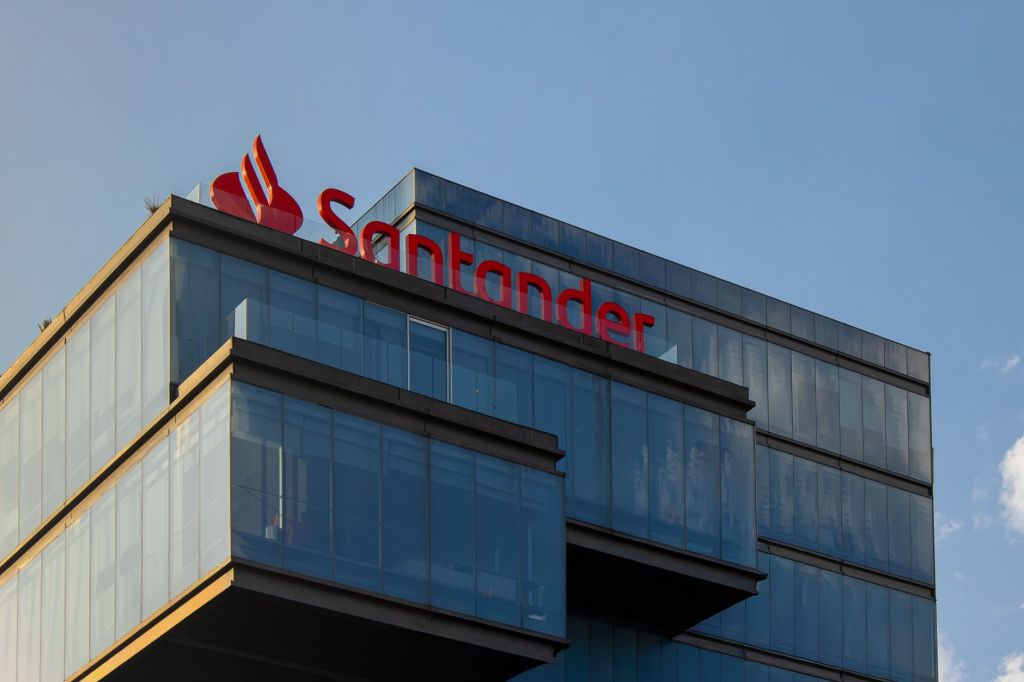
Companies Are Finally Putting a Number on AI Gains — Santander Says €194 Million
Introduction
For two years, companies have promised that artificial intelligence will make them more efficient and more profitable. Investors kept asking the same question: show me the money.
In this earnings season, some companies are finally starting to answer — with numbers, even if those numbers are still rough.
What Happened
Spanish bank Santander said its AI initiatives generated €194 million (about $216 million) in business value in the first nine months of 2026. The bank reported the figure alongside record underlying profit of €11.18 billion for the same period, up 16% from a year earlier.
Other companies pointed in the same direction without giving an AI-specific total. Drug maker Novartis reported third-quarter core operating income of $6.04 billion, up 10% at constant currencies, and said AI had begun to improve its bottom line. Standard Chartered reported third-quarter operating income growth of 14% at constant currency, excluding notable items, and said AI tools were helping it scale more efficiently.
Key figures
- Santander AI business value, first nine months of 2026: €194 million (about $216 million)
- Santander underlying profit, same period: €11.18 billion, up 16%
- Novartis Q3 core operating income: $6.04 billion, up 10% at constant currencies
- Standard Chartered Q3 operating income growth: 14% at constant currency, excluding notable items
- Global corporate AI investment in 2025: $581.7 billion, up 130% from the prior year (Stanford HAI 2026 AI Index)
Why It Happened
Santander’s chief financial officer, José García Cantera, said AI is helping the bank cut low-value tasks so employees can focus on higher-value work. That affects both revenue and costs, he said — the first quarter, in his words, where the bank could directly link a positive contribution to AI.
But there is an important warning attached to the number. Santander’s €194 million is a company-defined measure, not a standard accounting figure. It combines extra revenue, cost savings and lower loan-loss provisions from its data and AI programmes, and it was not audited as a separate measure. In other words, it is the bank’s own best estimate, not a figure every company calculates the same way.
That is why comparisons are tricky. Meta linked AI to stronger advertising growth but gave no AI-only revenue figure. Alphabet’s Google Cloud revenue jumped 103% to $30.71 billion, helped by AI demand, but that is a whole business line, not an AI profit number. And not every company is seeing gains yet: brewer Carlsberg said this week it is not seeing AI benefits at scale, even though the technology has affected costs, pricing and marketing.
Why It Matters
The €194 million matters less as a precise profit count and more as a sign of a shift. Companies are moving from talking about AI pilots to trying to measure AI in their accounts. Investors have been worried that AI spending — $581.7 billion globally in 2025 alone — is growing faster than AI returns. Even small, honest numbers help answer that worry.
At the same time, the different yardsticks are a reason to stay careful. When every company measures AI differently, a big number from one firm cannot be directly compared with a vague claim from another.
What Happens Next
Expect more companies to publish AI numbers in the next few earnings seasons, and expect analysts to push them on how those numbers are calculated. The useful question is not just ‘how much did AI add?’ but ‘how did you count it, and would another company count it the same way?’
Santander itself has set a bigger target: its chair has said AI should help grow annual revenue by about €300 million and cut costs by about €700 million by 2028. That gives investors something concrete to check against in future reports.
Final Thoughts
AI is starting to show up in earnings, not just in presentations. Santander’s €194 million is a first step, not a final proof. The companies that win trust will be the ones that explain their numbers clearly — and keep reporting them, good quarter or bad.
Related: Anthropic IPO, Nasdaq and AI spending worries
Disclaimer: This article is for educational and informational purposes only and does not constitute financial advice.
Sources: CNBC, https://www.cnbc.com/2026/11/01/ai-investments-company-earnings.html; Santander results as reported by Kalkine, https://kalkine.com/news/announcements/santander-posts-112bn-underlying-profit-for-first-nine-months-of-2026; AI gains summary as reported by Political.org, https://political.org/2026/10/31/santander-novartis-cite-first-measurable-ai-gains-in-third-quarter-earnings-as-investors-demand-returns/
-

AI Is Helping Meta Sell More Ads — While Google Search Growth Slows to 12%
Introduction
Two of the biggest advertising companies in the world just reported very different quarters. Meta’s advertising business is growing fast, helped by artificial intelligence. Google’s search business is still growing, but more slowly — and AI is part of the reason.
What Happened
Meta reported $63.1 billion in advertising revenue for the third quarter of 2026, up 26% from a year earlier. Total company revenue was $64.6 billion, also up 26%. The number of ads people saw rose 10%, and the average price of an ad rose 14%.
Alphabet, Google’s parent company, reported $127.6 billion in total revenue, up 25%. But Google Search and other revenue grew 12% to $63.35 billion. That is solid growth in normal terms, yet it is clearly slower than Meta’s advertising growth — and slower than Google’s own search growth in recent quarters.
Key figures
- Meta advertising revenue: $63.1 billion, up 26%
- Meta ad impressions: up 10%; average ad price: up 14%
- Meta total revenue: $64.6 billion, up 26%
- Google Search and other revenue: $63.35 billion, up 12%
- Alphabet total revenue: $127.6 billion, up 25%
- Google Cloud revenue: $30.71 billion, up 103%
Why It Happened
Meta says AI is making its ads work better. When ads are shown to people who are more likely to be interested, advertisers are willing to pay more, and more of those ads lead to a sale or a sign-up. Meta also pointed to more user engagement across Facebook, Instagram and its other apps.
Google’s story is more mixed. Alphabet said search query growth was the fastest in five years, helped by AI. But more questions do not automatically mean more advertising money. Google’s chief business officer said AI Mode searches — where an AI answer appears instead of a simple list of links — currently bring in less advertising revenue than a traditional search. Foreign exchange was also the largest single factor in the slowdown, the company said.
In plain terms: people are searching more, but the new kind of search is harder to turn into ad money, at least for now.
Why It Matters
Advertising pays for most of what these companies offer for free. If Meta can keep improving ad performance with AI, it has a strong engine for profit, even while it spends heavily on AI data centres. Meta guided fourth-quarter revenue to between $73 billion and $76 billion.
For Google, the question is different. Search is still a huge business — $63.35 billion in one quarter is enormous. But investors are watching closely: can Google make AI search pay as well as old-fashioned search did? Google only started showing ads alongside AI Mode searches worldwide on October 29, so that part of the story is just beginning.
What Happens Next
Watch two things. First, whether Meta’s ad prices keep rising without scaring advertisers away. Second, whether Google’s AI Mode advertising starts to close the gap between fast query growth and slower revenue growth. The next earnings reports will give a clearer answer.
Final Thoughts
AI is not helping every big tech company in the same way. Right now, it is boosting Meta’s core business directly. For Google, AI is bringing more users and more questions, but the money side is still catching up. That difference explains a lot about how these two giants are being judged today.
Related: Why Google Stock Crashed 12.6%: What Investors Need to Know
Disclaimer: This article is for educational and informational purposes only and does not constitute financial advice.
Sources: CNBC, https://www.cnbc.com/2026/11/01/ai-meta-ads-google-search.html ; Meta Q3 2026 results as reported by Exchange4Media, https://www.exchange4media.com/digital-news/metas-ad-revenue-jumps-26-to-631-billion-as-ai-boosts-conversions-ad-prices-159351.html ; Alphabet Q3 2026 results as reported by NeoTeo, https://www.neoteo.com/en/alphabets-q3-2026-results-search-and-cloud-grow-free-cash-flow-is-negative
-

AI Law Firm Crosby Bids for Weil Gotshal’s Brand and Data as the 95-Year-Old Firm Winds Down
Introduction
A 95-year-old Wall Street law firm is preparing to vote itself out of existence. And a two-year-old law firm built around artificial intelligence wants to buy its name.
Weil, Gotshal & Manges, known as Weil Gotshal, is one of America’s most famous law firms. Now its management committee has recommended an orderly wind-down, and AI-first law firm Crosby has submitted a bid for its trademark, brand and some of its internal data.
What Happened
On October 28, Weil’s management committee recommended to its partners that the firm pursue an orderly wind-down. The partners are expected to vote on the plan in the coming days.
Then, on October 29, Crosby submitted a letter of intent to buy parts of Weil: its trademark, its brand name and some unspecified internal data. The bid was first reported by The Information and then by TechCrunch. The financial terms have not been disclosed, and there is no guarantee Weil’s partners will accept the offer.
Crosby is also trying to hire some of Weil’s roughly 1,200 lawyers. That recruiting effort is separate from the bid for the brand and data.
Key Figures
- Weil Gotshal founded: 1931, making it 95 years old
- Lawyers: around 1,200
- Annual revenue: more than $2 billion last year
- Partners who left in 2026: more than 30
- Crosby launched: 2025, as an AI-first law firm
- Crosby funding raised: about $85 million, including a $60 million Series B round in March led by Lux and Index
Why It Happened
Weil’s problems built up over months. More than 30 partners left during 2026, including corporate chair Michael Aiello, who moved to rival firm Cravath. Merger talks with Willkie Farr & Gallagher collapsed in late October. And Ramona Nee, the partner who had been expected to take over as the firm’s leader, declined the top job.
With its leadership uncertain, its rainmakers leaving and no merger to save it, the management committee concluded there was no workable path forward. The firm has hired restructuring adviser AlixPartners and law firm Davis Polk to advise on the wind-down. Staff have been told they will be paid for 90 days and will receive bonuses at the end of 2026.
Why It Matters
It is tempting to read this as a story about AI killing a law firm. The reporting does not support that. Weil’s troubles came from partner departures, failed merger talks and leadership uncertainty — not from AI.
What the Crosby bid does show is how AI companies now see value in old institutions. A brand built over 95 years, a client list and decades of internal data are assets a young company cannot build overnight. Buying them could be faster than building them.
There are also big unanswered questions. What exactly is included in “internal data”? Does it touch client material? Those details have not been reported, and they will matter a lot if the bid moves forward.
What Happens Next
First comes the dissolution vote by Weil’s partners. If they approve the wind-down, the firm will spend the coming months finishing client work and closing down in an orderly way.
Then comes the decision on Crosby’s bid — and whether any other buyers emerge. Crosby may end up with the brand, the lawyers, both or neither.
Final Thoughts
Weil Gotshal worked on some of the biggest cases in American business history, from Lehman Brothers to General Motors and Enron. Its possible end is a reminder that no reputation, however old, protects a firm that loses its people and its leadership plan.
And the bidder tells its own story. The company trying to buy a piece of Weil is two years old and runs on AI. Whatever happens next, that contrast says a lot about where the legal industry is heading.
Disclaimer: This article is for educational and informational purposes only and does not constitute financial advice.
Sources: TechCrunch report on Crosby’s bid, as summarised by AI Weekly (https://aiweekly.co/alerts/ai-law-firm-crosby-bids-for-weil-gotshals-brand-and-data); The Global Legal Post on Weil’s wind-down vote (https://www.globallegalpost.com/news/weil-partnership-set-to-vote-on-closure-plan-1230207207)
-
South Korea’s Exports Nearly Doubled in October as AI Chip Demand Soared
South Korea just posted one of the biggest export jumps in its history, and the reason is simple: the world cannot get enough AI chips.
Exports rose 93.7% in October compared with a year earlier, reaching $115.28 billion, according to government data reported by Reuters on Sunday, November 1. That was slightly above what economists had expected, and it was the strongest growth since January 1974 — more than 50 years ago.
What Happened
The headline number is huge, but the detail underneath it is even more striking. Sales of semiconductors — the chips that power computers, phones and AI data centres — jumped 259.4% to $56.44 billion. That means chips alone made up almost half of everything South Korea sold abroad in October.
Computer sales, mainly servers and storage drives used for AI services, spiked 496.6%. Electrical equipment, including transformers, wires and cables used to build data centres, also hit a monthly record.
For the first ten months of the year, South Korea’s exports totalled $930 billion. Trade Minister Kim Jung-kwan said it is now almost certain that annual exports will pass $1 trillion within November. If that happens, South Korea would become only the fourth country ever to reach that mark, after the United States, China and Germany.
Why It Happened
This is not a mystery. Big tech companies around the world are spending heavily to build AI data centres, and those data centres need enormous amounts of memory chips. South Korea is home to two of the world’s biggest memory makers, Samsung Electronics and SK Hynix, so it sits right at the centre of that spending.
The trade ministry said chip exports stayed above $50 billion for a second month because global tech firms kept investing to lead in AI, keeping both prices and sales volumes high. South Korea’s economy already grew faster than expected in the third quarter on strong semiconductor exports, and October shows that trend is still going.
There is one important caveat, though. Part of the jump comes from the calendar. Last year, the Chuseok harvest holiday fell in October, which meant fewer working days. This year it fell in September, so October 2026 had more working days. Adjusted for that, average daily exports still rose about 76% — still extraordinary, just not quite as extreme as the headline 93.7% suggests.
Why It Matters
Think of South Korea’s trade numbers as a health check for the global tech industry. When companies are really building AI systems, they buy chips, servers and power equipment. When they slow down, those orders are usually the first thing to fade.
Right now, the orders are not fading. That matters for investors who have been worried in recent weeks about whether AI spending is getting out of control. The spending is real, at least on the hardware side: factories are shipping products, and customers are paying for them.
It also matters beyond tech. Exports to China rose 134% to $27 billion and exports to the United States rose 186% to $24.9 billion, with the ministry singling out AI-related goods in both cases. In other words, the AI boom is not just an American story. It is moving goods, money and factory work across Asia and around the world.
Related reading: AI spending worries
What Happens Next
The next question is whether this pace can last. October was the second-biggest export month on record, behind September’s $121.1 billion, so the level is already very high. If AI investment keeps growing, chip demand should stay strong. If tech companies start cutting their data-centre budgets — the fear that hit tech stocks hard last week — South Korea’s export numbers would be one of the first places to show it.
For now, though, the message from Seoul is clear: the AI build-out is not just talk and stock prices. It is showing up in ports, factories and trade data.
Final Thoughts
A 93.7% jump in exports sounds almost too big to be real, and the holiday calendar does flatter it a little. But even after adjusting for that, this was a remarkable month. When a country that makes the world’s memory chips nearly doubles its exports, it tells you something simple: AI is still being built, fast, and someone has to supply the parts.
Key figures:
- Total October exports: $115.28 billion, up 93.7% year over year
- Semiconductor exports: $56.44 billion, up 259.4%
- Computer exports: up 496.6%
- January–October exports: $930 billion
- Strongest export growth since January 1974
Disclaimer: This article is for educational and informational purposes only and does not constitute financial advice.
Sources: Reuters report on South Korea’s October exports (via syndication, November 1, 2026); South Korea Ministry of Trade, Industry and Resources figures as reported by Reuters.

