Introduction
You are a student who has never borrowed money before. You have no credit history, and that can feel like a problem. A landlord may ask for your credit score before they rent you a room, and a bank may ask for it before they give you a loan. You start small, you pay on time, and you let time do the work.
What It Is
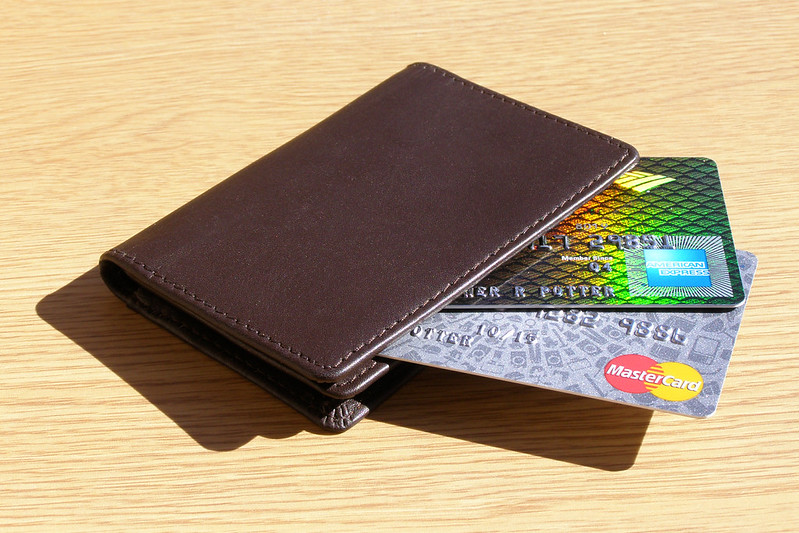
Credit is money you borrow now and pay back later. A credit card is the most common way students borrow. You buy something with the card, the bank pays the shop, and then you pay the bank back. If you pay on time, the bank tells the credit bureaus that you paid on time. A credit bureau keeps a record of how people pay back money they borrow. In Canada, there are two main credit bureaus: Equifax Canada and TransUnion Canada. They also give you a credit score, a number from 300 to 900. If you have never borrowed before, you start with no score at all.
Your credit score matters because lenders use it to decide if they trust you. A good score can help you rent a home or borrow money at a lower rate later. A bad score can make all of those things harder and more costly. You can learn what the score means in our guide What Is a Credit Score in Canada and What Makes It Go Up or Down?
How It Works
Your score is built from five main things, and each one counts for a different share. The biggest one is payment history, and it counts for about 35% of your score. Payment history is a record of whether you pay on time. The second biggest one, credit utilization, counts for about 30% of your score. Credit utilization is how much of your credit limit you use. If your limit is $1,000 and you owe $300, your utilization is 30%. Keep it under 30%. The third one, the length of your credit history, counts for about 15%. New credit and the mix of credit types count for about 10% each.
The first step is to get a card that reports to the bureaus. A student credit card is made for students, with a low limit and often no yearly fee. If a bank says no to a student card, a secured credit card is the next best step. With a secured credit card, you pay a deposit first, and the deposit becomes your credit limit. For example, you pay a $300 deposit, and your limit is $300. A secured card reports to the bureaus just like a normal card.
Use your card in a small and steady way. Put one small bill on it each month. Then pay the full balance on time, every month. Paying the full balance means you pay no interest. Interest is extra money you pay for borrowing. You can learn how that works in our guide How Credit Card Interest Works in Canada.
You should also check your credit report for free. You can ask Equifax Canada and TransUnion Canada for a free copy of your report, once or twice a year. Look for mistakes, and tell the bureau if you find one.
An Example With Numbers
Meet Maya, a first-year student in Toronto. She opens a student credit card with a limit of $1,000. She puts only her $60 phone bill on the card each month and pays the full $60 on time. Her utilization is 6%, because $60 out of $1,000 is 6%. That is well under the 30% line.
Now meet her friend Jay, who has the same $1,000 limit. Jay spends $900 on the card in one month, and he pays only the $25 minimum payment. His utilization is 90%, because $900 out of $1,000 is 90%. That is very high, and it hurts his score, even though he never missed a payment. After a year, Maya has twelve on-time payments and a low balance, while Jay has a high balance and a lot of interest.
How long does this take? A first score usually appears after about three to six months of reported use. Equifax says about three months of reported use is usually enough, and TransUnion says about six months. But a first score is not a strong score. Reaching a good score, which is 660 or higher, usually takes one to two years of on-time payments.
Common Mistakes
One big mistake is to miss a payment, even by a few days. A late payment can stay on your credit report for up to six years, according to the FCAC. That is a long time for one small mistake. Set up an automatic payment for at least the minimum, so you never miss a due date. A second mistake is to max out your card. A card is maxed out when you use all of your limit. Keep your balance low.
A third mistake is to apply for many cards at once. Each application is a hard check on your report, and too many checks in a short time can lower your score. Pick one card and use it well. A fourth mistake is to close your first card. Your oldest card helps your credit history, because length of history counts for about 15% of your score. Keep your first card open. A fifth mistake is to ignore your student loan. If you have an OSAP loan, it can affect your credit too, once you start to pay it back. An OSAP loan works the same way.
Final Thoughts
Building credit as a student is not hard, but it is slow. There is no trick that builds a great score in one month. The plan is simple: get one card that reports to the bureaus, use a small part of your limit, pay in full on time every month, and keep your oldest card open. Start in your first year, and by graduation you will have a real credit history.
Quick Questions
How long does it take to build credit as a student in Canada?
A first score usually appears after about three to six months. Reaching a good score of 660 or higher usually takes one to two years of on-time payments.
What is a secured credit card, and should a student get one?
It is a card where you pay a deposit first, and the deposit becomes your credit limit. It is a good choice if a bank says no to a regular student card.
How much of my credit limit should I use?
Keep it under 30% of your limit. On a $1,000 limit, that means keeping your balance under $300.
Disclaimer: This article is for educational and informational purposes only and does not constitute financial advice.
Sources: Financial Consumer Agency of Canada, Credit report and score basics (scores range 300–900; payment history is the most important factor; late payments can stay on a report for up to 6 years) — https://www.canada.ca/en/financial-consumer-agency/services/credit-report-score.html ; Equifax Canada score factors (payment history about 35%, credit used about 30%, history length about 15%) via https://www.settlecanada.ca/banking/credit-score-101/ ; first-score timeline (Equifax about 3 months, TransUnion about 6 months) and good-score timeline (1–2 years) via https://canada.smartsavingsguides.com/how-long-to-build-credit-canada