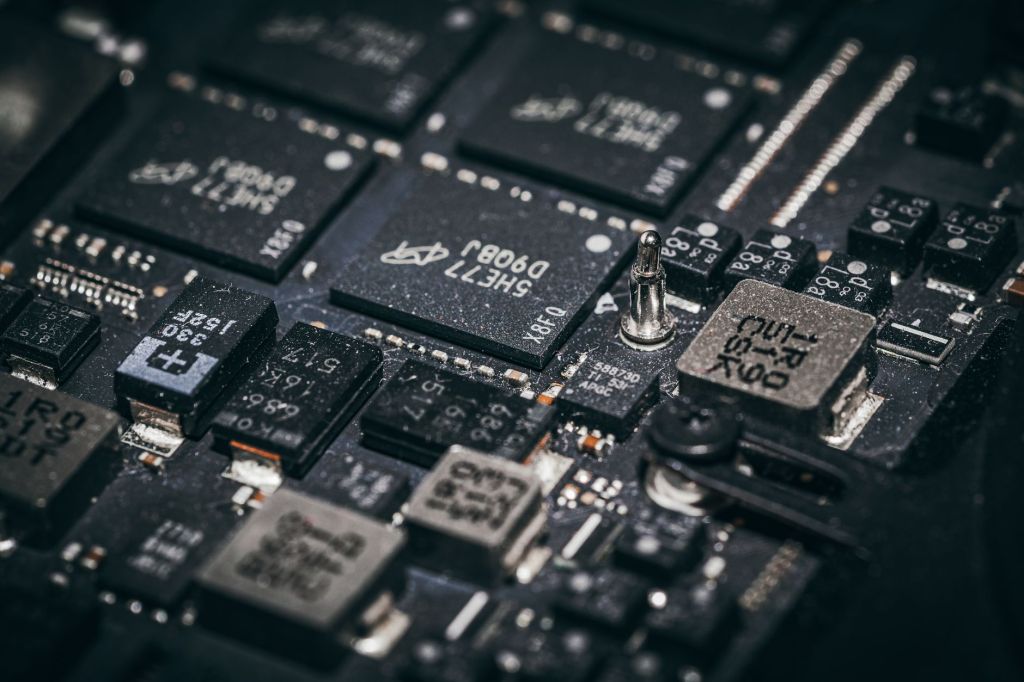
South Korea just posted one of the biggest export jumps in its history, and the reason is simple: the world cannot get enough AI chips.
Exports rose 93.7% in October compared with a year earlier, reaching $115.28 billion, according to government data reported by Reuters on Sunday, November 1. That was slightly above what economists had expected, and it was the strongest growth since January 1974 — more than 50 years ago.
What Happened
The headline number is huge, but the detail underneath it is even more striking. Sales of semiconductors — the chips that power computers, phones and AI data centres — jumped 259.4% to $56.44 billion. That means chips alone made up almost half of everything South Korea sold abroad in October.
Computer sales, mainly servers and storage drives used for AI services, spiked 496.6%. Electrical equipment, including transformers, wires and cables used to build data centres, also hit a monthly record.
For the first ten months of the year, South Korea’s exports totalled $930 billion. Trade Minister Kim Jung-kwan said it is now almost certain that annual exports will pass $1 trillion within November. If that happens, South Korea would become only the fourth country ever to reach that mark, after the United States, China and Germany.
Why It Happened
This is not a mystery. Big tech companies around the world are spending heavily to build AI data centres, and those data centres need enormous amounts of memory chips. South Korea is home to two of the world’s biggest memory makers, Samsung Electronics and SK Hynix, so it sits right at the centre of that spending.
The trade ministry said chip exports stayed above $50 billion for a second month because global tech firms kept investing to lead in AI, keeping both prices and sales volumes high. South Korea’s economy already grew faster than expected in the third quarter on strong semiconductor exports, and October shows that trend is still going.
There is one important caveat, though. Part of the jump comes from the calendar. Last year, the Chuseok harvest holiday fell in October, which meant fewer working days. This year it fell in September, so October 2026 had more working days. Adjusted for that, average daily exports still rose about 76% — still extraordinary, just not quite as extreme as the headline 93.7% suggests.
Why It Matters
Think of South Korea’s trade numbers as a health check for the global tech industry. When companies are really building AI systems, they buy chips, servers and power equipment. When they slow down, those orders are usually the first thing to fade.
Right now, the orders are not fading. That matters for investors who have been worried in recent weeks about whether AI spending is getting out of control. The spending is real, at least on the hardware side: factories are shipping products, and customers are paying for them.
It also matters beyond tech. Exports to China rose 134% to $27 billion and exports to the United States rose 186% to $24.9 billion, with the ministry singling out AI-related goods in both cases. In other words, the AI boom is not just an American story. It is moving goods, money and factory work across Asia and around the world.
Related reading: AI spending worries
What Happens Next
The next question is whether this pace can last. October was the second-biggest export month on record, behind September’s $121.1 billion, so the level is already very high. If AI investment keeps growing, chip demand should stay strong. If tech companies start cutting their data-centre budgets — the fear that hit tech stocks hard last week — South Korea’s export numbers would be one of the first places to show it.
For now, though, the message from Seoul is clear: the AI build-out is not just talk and stock prices. It is showing up in ports, factories and trade data.
Final Thoughts
A 93.7% jump in exports sounds almost too big to be real, and the holiday calendar does flatter it a little. But even after adjusting for that, this was a remarkable month. When a country that makes the world’s memory chips nearly doubles its exports, it tells you something simple: AI is still being built, fast, and someone has to supply the parts.
Key figures:
- Total October exports: $115.28 billion, up 93.7% year over year
- Semiconductor exports: $56.44 billion, up 259.4%
- Computer exports: up 496.6%
- January–October exports: $930 billion
- Strongest export growth since January 1974
Disclaimer: This article is for educational and informational purposes only and does not constitute financial advice.
Sources: Reuters report on South Korea’s October exports (via syndication, November 1, 2026); South Korea Ministry of Trade, Industry and Resources figures as reported by Reuters.

