Introduction
Americans vote on Tuesday, November 3.
These are midterm elections.
Midterm means an election in the middle of a president’s term.
Voters will choose all House seats.
They will choose about a third of Senate seats.
The president is not on the ballot.
But the result still matters for stocks.
It can change rules and spending.
It can change how closely firms are watched.
What Happened
Forecasts point to Democrats winning the House.
Control of the Senate is less clear.
That is the view in a Reuters analysis on Monday.
Investors are gaming out each outcome.
Gaming out means planning for each possible result.
Since Donald Trump returned to the White House in 2025, the S&P 500 rose about 27%.
The S&P 500 is a list of 500 large US firms.
It is often used to judge the whole market.
That rise came with full Republican control of Congress.
Now that control may change.
History gives a mixed guide.
Since 1930, the president’s party lost House control eight times at midterms.
In five of those cases, the S&P 500 rose from Election Day to year-end.
The median gain was 1.4%.
Median means the middle value.
Across all midterm years, the median gain was 1.9%.
History is not a promise.
It is only a guide.
Why It Matters for Each Sector
AI could face more questions.
Democrats are expected to push for stricter AI rules.
They could investigate big firms.
That could add worry to AI stocks.
But the president can veto new laws.
A veto means the president says no to a law.
That limits fast change.
Defence could face a split story.
If Democrats win big, oversight may tighten.
Funding delays could worry defence firms.
If Republicans hold ground, defence spending could rise.
JPMorgan named L3Harris, Lockheed Martin, and Northrop Grumman as possible winners in that case.
Health care is also split.
Hospitals may benefit if Medicaid cuts are walked back.
Medicaid is a health plan for people with low income.
Insurers face a different story.
Some hope for restored health subsidies.
Subsidies are money that helps people pay for plans.
Crypto firms could face more heat.
Their ties to the Trump family draw attention.
Banks could face more scrutiny too.
Scrutiny means close checking by lawmakers.
What Happens Next
Vote first, on Tuesday.
Then watch the counts.
Some races may take time to call.
Watch for divided control.
Divided control means different parties run each chamber.
That raises the risk of shutdowns.
It raises the risk of debt-limit fights.
A debt limit is a cap on how much the government can borrow.
Watch also for debt talks.
Spending choices on defence and health care could widen deficits.
A deficit means the government spends more than it earns.
None of this changes stocks alone.
Earnings, jobs, and interest rates matter too.
Final Thoughts
An election does not pick stock winners by itself.
It changes the rules of the game.
It changes what firms must answer for.
That is why investors watch Tuesday so closely.
The market will react to the result.
Then it will move on to the next test.
Disclaimer: This article is for educational and informational purposes only and does not constitute financial advice.
Sources: CNBC, https://www.cnbc.com/2026/11/02/midterm-election-stocks-defense-healthcare-crypto-ai.html ; Reuters analysis, https://wixx.com/2026/11/02/analysis-investors-gaming-out-congress-control-for-spending-ai-outlook/
Related post: https://thefinanceclass.wordpress.com/2026/11/01/midterm-election-municipal-bond-market-investors/
Tag: Healthcare
-
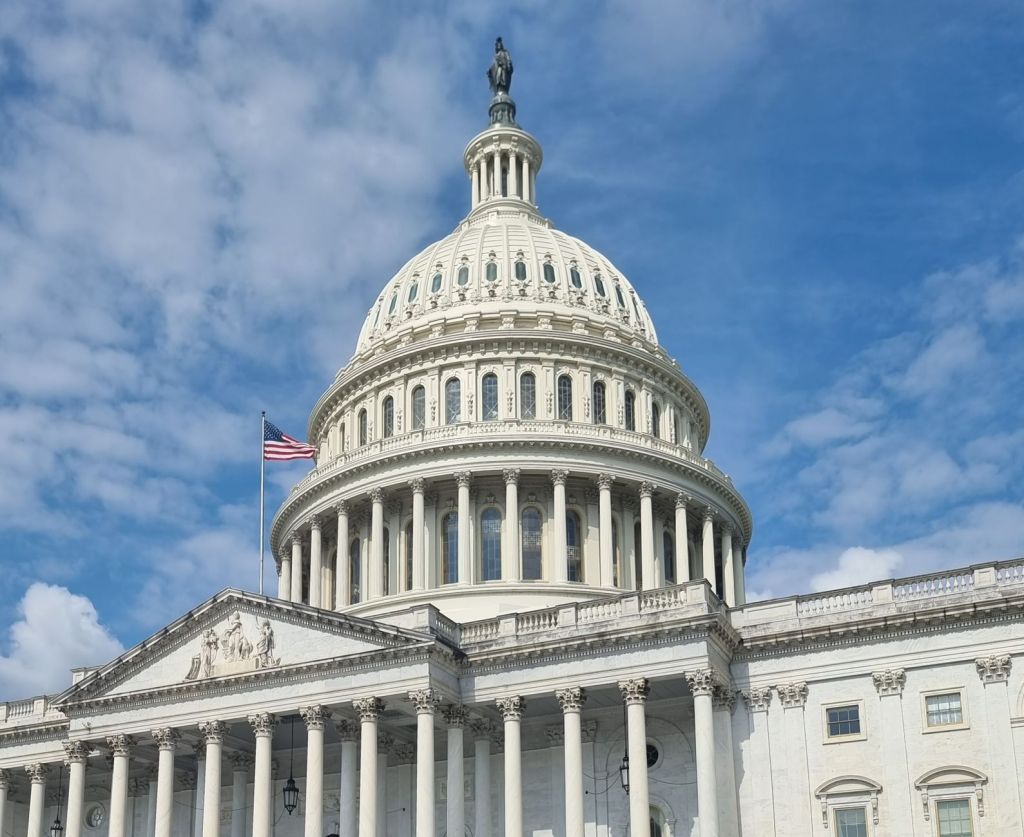
How Tuesday’s Election Could Move Stocks in Defence, Health Care, Crypto and AI
-

Merck Beats Earnings Expectations as Keytruda and Gardasil Lead the Way
Merck reported a stronger-than-expected third quarter on October 29, helped by its cancer drug Keytruda and its HPV vaccine Gardasil. The drugmaker also raised its profit outlook for the full year.
What Happened
Merck reported third-quarter revenue of $18.1 billion, above the average analyst estimate of $17.3 billion. Adjusted earnings were $2.49 per share, well ahead of the $2.08 analysts expected.
Keytruda sales rose 6% from a year earlier to $8.6 billion, beating the $7.73 billion estimate. That total included $830 million from Keytruda QLEX, a newer injectable form of the drug. Gardasil sales rose 14% to just under $2 billion, helped by early purchases from the US Centers for Disease Control and Prevention. Winrevair, a drug for pulmonary arterial hypertension, saw sales jump 93% to $694 million.
Merck raised the low end of its full-year revenue forecast to $66.8 billion, from $66.3 billion, keeping the top end at $67.3 billion. It also lifted its adjusted profit forecast to $2.77 to $2.82 per share, up from $2.66 to $2.76. That new profit outlook includes a one-time charge of $400 million, or 12 cents per share, linked to a licensing deal with Chinese drugmaker SciBrunch.
Why It Happened
Keytruda is still the engine of Merck. It is one of the world’s best-selling drugs, used to treat many types of cancer. The new injectable version, Keytruda QLEX, is making the drug easier to give to patients, and it had its strongest quarter since launch.
Gardasil also helped. The vaccine prevents cancers linked to the human papillomavirus. Sales had been hurt by weak demand in China in recent quarters, but early US government purchases gave this quarter a lift.
About $550 million of quarterly sales came from favorable purchase and inventory timing in the US for Keytruda, Gardasil and Winrevair. Merck expects much of that to reverse in the fourth quarter and in 2027, so not all of this quarter’s strength will repeat.
Why It Matters
Merck faces a well-known challenge: Keytruda will start losing key patent protection in 2028. When a drug loses patent protection, cheaper generic versions can enter the market and sales usually fall sharply. That is why Merck is working hard to build up other products before that happens.
This quarter matters because it shows the rest of the portfolio is starting to carry more weight. Winrevair nearly doubled. Gardasil bounced back. And the company said it plans to raise its revenue forecast for new products over the next decade, above the $70 billion by the mid-2030s it projected in January, thanks to recent clinical trial results and deals such as its Terns Pharma agreement.
For investors, the message is mixed but positive: the core business is still strong, and management is more confident about what comes after Keytruda.
Key Figures
Figure Q3 2026 Revenue $18.09 billion, vs $17.31 billion expected Adjusted EPS $2.49, vs $2.08 expected Keytruda sales $8.6 billion, up 6% Keytruda QLEX sales $830 million Gardasil sales Just under $2 billion, up 14% Winrevair sales $694 million, up 93% Full-year revenue outlook $66.8–$67.3 billion Full-year adjusted EPS outlook $2.77–$2.82 What Happens Next
Looking to 2027, Merck expects only moderate revenue growth. Gains from newer drugs and animal health should be partly offset by a hit of more than $2 billion from generic competition and patent expirations on older products. Keytruda’s growth is also expected to slow as it nears peak sales in some uses.
The key things to watch are whether Winrevair and other newer drugs keep growing fast, whether Gardasil demand in China recovers, and how the new-product pipeline develops ahead of the 2028 patent cliff.
Final Thoughts
Merck’s quarter was a clear beat, and the raised outlook backs that up. But the real story is longer term: can Merck replace Keytruda’s sales before patents expire? This quarter gave investors a reason to believe it can — but the next two years will be the real test.
Disclaimer: This article is for educational and informational purposes only and does not constitute financial advice.
Sources: CNBC, “Merck tops estimates, hikes profit outlook on strength of injectable Keytruda” (https://www.cnbc.com/2026/10/29/merck-mrk-earnings-q3-2026.html); Reuters via 94.7 The Beast, “Merck tops third-quarter estimates as Keytruda, Gardasil outperform” (https://947thebeast.com/2026/10/29/merck-tops-third-quarter-estimates-as-keytruda-gardasil-outperform/)
Related healthcare earnings — Eli Lilly’s outlook raise on weight-loss drug demand: https://thefinanceclass.wordpress.com/2026/10/30/eli-lilly-raises-outlook-weight-loss-demand/
-
Eli Lilly Raises Sales Outlook to $92 Billion as Weight-Loss Drug Demand Soars
While many big stocks were falling this week, Eli Lilly went the other way. The drugmaker reported a very strong third quarter on Thursday, October 29, raised its full-year sales outlook, and saw its shares rise about 7% on the day.
The reason is no mystery. Demand for its diabetes and weight-loss medicines, Mounjaro and Zepbound, keeps growing, in the United States and around the world.
What Happened
Eli Lilly’s revenue rose 39% from a year earlier to $24.4 billion in the third quarter of 2026. That was well above the $22.61 billion analysts expected. Adjusted earnings per share came in at $7.48, up 7% from a year earlier. Reported net income rose to $6.5 billion, or $7.22 per share, from $5.6 billion a year earlier.
Mounjaro, the company’s diabetes medicine that is also widely used for weight loss, brought in $10.7 billion, up 65% from a year earlier. Sales outside the United States nearly doubled, and US sales rose 41%. Zepbound, the company’s weight-loss medicine, brought in $5.35 billion, up about 49%.
Together, Mounjaro and Zepbound generated more than $16 billion in the quarter, about $6 billion more than a year earlier.
The company also raised its full-year 2026 revenue forecast to $91 billion to $92 billion, up from $85 billion to $87 billion. That is a $5.5 billion increase at the midpoint. Its full-year adjusted earnings forecast moved to $35 to $36 per share, from $35.50 to $36.50 before. The company said its underlying profit outlook actually rose, but $4.57 per share in charges from research deals it acquired in the quarter more than offset that gain.
Why It Happened
The main driver is simple: more people are using these medicines, and more countries are covering them. In the United States, a Medicare programme that helps people access weight-loss medicines has seen strong early uptake, with more than 500,000 prescriptions filled since July 1. In China, Mounjaro passed $1 billion in revenue in its first full year after being added to the national reimbursement list, which means the government helps pay for it.
About $900 million of the quarter’s revenue came from one-time benefits, including $410 million in milestone payments linked to the diabetes medicine Jardiance. The company said no further Jardiance milestones remain, so that boost will not repeat.
Eli Lilly also reported progress on new products. Its new weight-loss pill, Foundayo, launched in the United States in April, brought in $184 million in the quarter, below the roughly $229 million analysts expected. But the company also won US regulatory approvals for new uses of its medicines, including Mounjaro for reducing cardiovascular risk in adults with type 2 diabetes, and a once-weekly insulin called Onswik.
Key Figures
- Q3 revenue: $24.4 billion, up 39% (expected: $22.61 billion)
- Q3 adjusted earnings per share: $7.48, up 7%
- Q3 net income: $6.5 billion
- Mounjaro revenue: $10.7 billion, up 65%
- Zepbound revenue: $5.35 billion, up about 49%
- New 2026 revenue forecast: $91 billion to $92 billion (from $85 billion to $87 billion)
- New 2026 adjusted earnings forecast: $35 to $36 per share
- Shares: rose about 7% on Thursday
Why It Matters
Eli Lilly’s results show that the weight-loss medicine market is still in its early stages. The company’s chief executive, Dave Ricks, said only an estimated 3% to 10% of eligible patients in the United States currently receive obesity care. If that number grows, the market could expand dramatically, but it also means the company’s growth depends on insurance coverage, government programmes and manufacturing capacity keeping up with demand.
For investors, Lilly is also a contrast to the technology sell-off this week. While tech companies are being punished for heavy spending, Lilly is being rewarded for products people already buy in large numbers. It is a reminder that not all growth stories depend on the same thing.
What Happens Next
The company will keep investing in factories to make more of its medicines, since supply has been a limit in the past. Investors will watch whether Mounjaro and Zepbound keep growing at this pace, whether the new pill Foundayo picks up, and whether competition from rival drugmakers starts to slow Lilly’s momentum. The next big test will be the fourth-quarter results early in 2027, which will show whether the raised forecast was cautious or confident.
Final Thoughts
Eli Lilly’s quarter was strong because the underlying demand is real and still growing. The raised outlook tells investors the company expects that demand to continue. But even here, the details matter: one-time benefits helped this quarter, and deal charges trimmed the profit forecast. Good results are worth celebrating, but reading past the headline is always worth the extra minute.
Disclaimer: This article is for educational and informational purposes only and does not constitute financial advice.
Sources: CNBC, “Eli Lilly hikes sales outlook, as CEO says there’s room for ‘dramatic’ obesity market expansion” (https://www.cnbc.com/2026/10/29/eli-lilly-lly-earnings-q3-2026.html); Eli Lilly Q3 2026 results press release via PR Newswire (https://www.tradingview.com/news/prnewswire:9aa6dc6999d18:0-lilly-reports-third-quarter-2026-financial-results-raises-full-year-guidance-and-highlights-regulatory-progress-across-the-portfolio/).

