Tag: General Motors

  • GM Is Leaving the NYSE for Nasdaq After 115 Years — Here’s Why It Matters

    GM Is Leaving the NYSE for Nasdaq After 115 Years — Here’s Why It Matters

    General Motors is making a move it has not made in more than a century. The carmaker will leave the New York Stock Exchange and list its shares on Nasdaq instead, starting November 17.

    The ticker will stay the same. The company will still trade as GM. Shareholders do not need to do anything.

    So why does a change of stock exchange matter? Because GM is trying to change how investors see it. It no longer wants to be judged only as an old car company. It wants to be seen as a technology company too.

    What Happened

    GM announced on October 27 that it will transfer its common stock listing from the NYSE to the Nasdaq Global Select Market. Trading on the NYSE will continue through the close on November 16. Nasdaq trading is expected to begin the next day, November 17.

    The company’s board approved the move the day before the announcement. GM said the GM ticker will not change, and existing shareholders do not need to take any action.

    The switch is a big symbolic break. GM first listed on the NYSE in 1911, and it returned to the exchange in 2010 after its bankruptcy reorganisation. Leaving now ends a relationship that, with that interruption, stretches back 115 years.

    Why It Happened

    GM’s chief financial officer, Paul Jacobson, tied the move to the company’s direction. He said GM’s customer-focused, technology-driven strategy is creating value for shareholders, and described Nasdaq as a natural home for the listing as the company grows.

    That strategy covers more than building cars. It includes software, driver-assistance features such as Super Cruise, connected services through OnStar, and electric vehicles. Nasdaq is best known as the home of large technology companies, so listing there fits the image GM wants.

    There is also a practical reason. A Nasdaq listing makes GM eligible for possible inclusion in the Nasdaq-100 Index, which tracks 100 of the largest non-financial companies listed on Nasdaq. Inclusion is not automatic, and GM has not announced that it will join the index. But eligibility alone opens the door to buying from funds that track the index.

    Key figures

    • NYSE trading through: close on November 16, 2026
    • Nasdaq trading expected from: November 17, 2026
    • Ticker after the move: GM (unchanged)
    • First NYSE listing: 1911; relisted in 2010
    • Share move on announcement day (October 27): up about 5.5%, with a further gain of about 2.4% the next day
    • Market value around the announcement: about $64.4 billion; shares closed at $76.31 on Monday, October 26

    Why It Matters

    A stock exchange listing does not change what a company makes or how much money it earns. GM will still build the same cars, employ the same workers, and face the same costs the day after the move.

    What it can change is who notices the stock. Index funds that follow the Nasdaq-100 can only buy companies listed on Nasdaq. If GM ever joins that index, those funds would need to buy its shares. That kind of steady, automatic demand is one reason companies care about index membership.

    It can also change the comparison set. On the NYSE, GM sits next to many banks, energy companies, and industrial firms. On Nasdaq, it sits next to technology companies. That may help some investors value its software and driver-assistance work more highly — but it can also invite tougher comparisons with companies that grow much faster.

    GM is not the first big company to make this jump. Walmart, DoorDash, and Palantir have all moved to Nasdaq in recent years for similar reasons, including index eligibility and brand visibility.

    What Happens Next

    The next test is simple: does the November 17 transfer go smoothly, and does anything else follow? Watch for any update on Nasdaq-100 eligibility, which is decided by the index provider, not by GM itself. Also watch GM’s hybrid plans — the company is preparing its Lansing plant for future hybrid versions of popular SUVs — because those product decisions will matter far more for profits than the exchange name on the stock ticker.

    Final Thoughts

    This is a branding and market-structure story, not a new car launch. GM is betting that being listed alongside technology companies will help investors see its software, driver-assistance, and electric-vehicle work more clearly. The move costs shareholders nothing and changes no shares they own. Whether it changes how the market values GM will take much longer than one trading day to judge.

    Disclaimer: This article is for educational and informational purposes only and does not constitute financial advice.

    Sources: CNBC, https://www.cnbc.com/2026/10/27/gm-nasdaq-nyse-stock-listing.html ; GM Authority, https://gmauthority.com/blog/2026/10/gm-moving-stock-listing-from-nyse-to-nasdaq/

    Related reading: Ford’s earnings

  • GM Will Pay $220 Million After Selling Drivers’ Private Data to Insurers

    GM Will Pay $220 Million After Selling Drivers’ Private Data to Insurers

    General Motors will pay $220 million to settle claims that it illegally sold drivers’ private driving and location data to third parties, who then sold it to insurance companies.

    The settlement, announced on Thursday, October 29, resolves claims by the attorneys general of 35 US states and the District of Columbia. It is one of the largest privacy settlements ever involving a carmaker, and it is a warning to every company that collects data from connected cars.

    What Happened

    The case centred on GM’s Smart Driver programme, which ran from 2016 to 2024. GM enrolled millions of drivers in the programme, which tracked how they drove: how many trips they took, when each trip started and ended, how often they braked hard or accelerated quickly, and whether they went over the speed limit.

    According to the states, GM sold that information to data brokers under contracts that said the data was to be used for insurance products. The brokers then sold it to insurers, who could use it to set premiums — and in some cases, raise them.

    The sharpest allegation was about consent. The states said more than 370,000 drivers were told they were not enrolled in Smart Driver when they actually were. Their data was sold anyway, and they were later unenrolled without being told about the error.

    GM did not admit wrongdoing in the way these settlements are usually structured, but a GM spokesperson said the agreement “addresses Smart Driver, a product we ended in 2024, and reinforces steps we’ve taken to strengthen our privacy practices.”

    Why It Happened

    Smart Driver was presented as a tool to help people drive more safely. The problem, according to the states, was what happened next. Drivers were not clearly told their detailed driving records would be sold for insurance use.

    The issue first became widely known in 2024, when The New York Times reported on the practice. After that reporting, GM discontinued Smart Driver. But the state investigations continued, and they ended with this $220 million settlement.

    The settlement also follows two earlier deals on the same issue. In January 2025, GM agreed with the US Federal Trade Commission not to share vehicle location and driver behaviour data with consumer reporting agencies for five years. In May 2026, GM paid $12.75 million to settle a separate California investigation into selling driver data to two data brokers.

    Why It Matters

    Your car now collects far more data than most people realise. Modern cars track location, speed, braking and even driving times. That data is valuable — insurers want it because it helps them guess who is a risky driver, and data brokers are happy to buy and sell it.

    This settlement sets a clear rule: a company cannot collect that kind of personal data and sell it on without clear, affirmative consent. “Affirmative express consent” means the driver must actively agree, not just fail to opt out of a buried setting.

    For drivers, the practical point is simple. If a car app or feature asks to track your driving, check what it does with the data and who it shares it with. A feature described as a safety tool may also be a data product.

    What Happens Next

    Under the settlement, GM must limit the driving data it collects, get drivers’ express consent before collecting or sharing driving and location data, and run a comprehensive data privacy programme with internal and outside assessments. It must also train and oversee dealerships so drivers are not signed up without agreeing.

    The money goes to the states, not directly to individual drivers. Arizona, for example, will receive $5.9 million, Pennsylvania nearly $9 million, and Colorado about $7.2 million. Drivers who believe their premiums rose because of Smart Driver data should not expect a cheque from this deal — the settlement names no individual payments.

    Other carmakers will be watching closely. If they run similar connected-car programmes, they now have a very expensive example of what happens when consent is unclear.

    Final Thoughts

    Cars used to be machines you owned. Now they are also computers that watch how you drive. That can be useful — for safety features, for maintenance, for finding your car. But the GM case shows the other side: once your driving record leaves the car, you lose control of who sees it and what they do with it. The $220 million price tag is GM’s bill for forgetting that drivers, not data brokers, should decide.

    Key figures:

    • Settlement: $220 million, announced October 29, 2026
    • Claimants: attorneys general of 35 states and the District of Columbia
    • Programme: Smart Driver, 2016 to 2024, millions of drivers enrolled
    • Drivers wrongly told they were not enrolled: more than 370,000
    • Earlier deals: FTC agreement (January 2025, five-year sharing ban); California settlement (May 2026, $12.75 million)
    • State shares (examples): Pennsylvania nearly $9 million, Colorado about $7.2 million, Arizona $5.9 million

    Disclaimer: This article is for educational and informational purposes only and does not constitute financial advice.

    Sources: CNBC business coverage of the GM settlement (October 31, 2026 edition); Reuters report on the settlement (via https://northlandnewsradio.com/2026/10/29/gm-to-pay-220-million-to-settle-allegations-it-violated-consumers-privacy/); Arizona Attorney General announcement (https://www.azag.gov/press-release/attorney-general-mayes-announces-settlement-gm-company-pay-220-million-sharing)

    Related: Cheaper Cars Are Selling Much Faster — But They Are Getting Harder to Find

  • How Ford, Rivian and GM Are Using 3D Printing to Build Cars Faster and Cheaper

    How Ford, Rivian and GM Are Using 3D Printing to Build Cars Faster and Cheaper

    Introduction

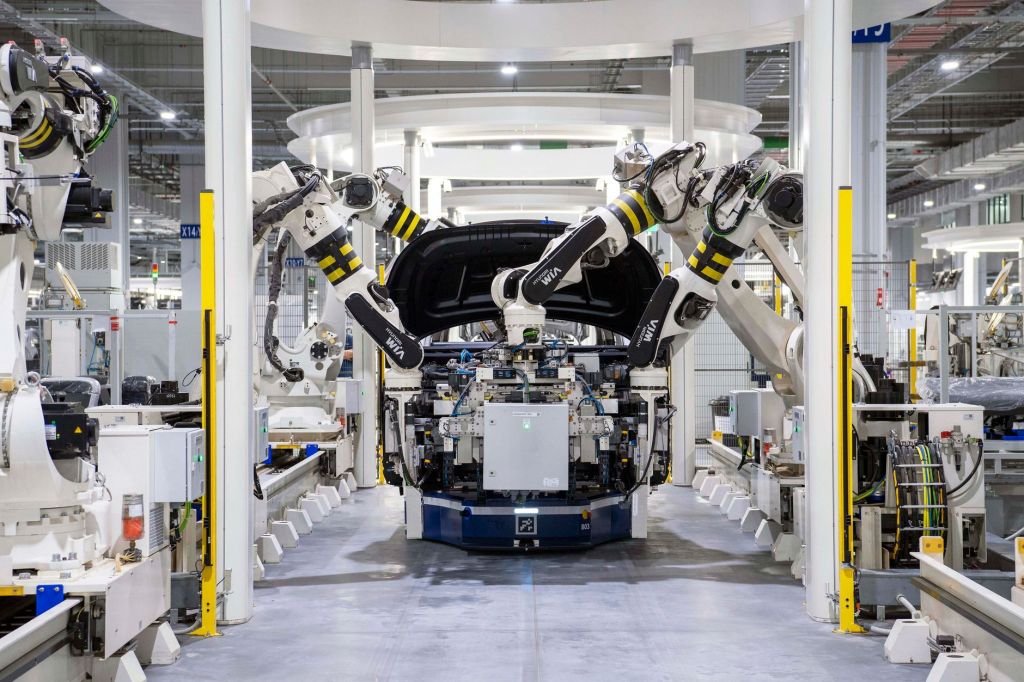
    Car factories are starting to print their own parts. Ford, Rivian and General Motors are now using 3D printing — also called additive manufacturing — for much more than prototypes. They are printing factory tools and selected production parts right on the factory floor, and the main reason is simple: speed.

    What Happened

    Rivian has spent more than $5 million on 3D-printing machines, and it spends about $1.7 million a year on printing materials. The company says the machines usually pay for themselves within a year. Parts that once took weeks to make can now be ready in days, and sometimes in hours. Rivian’s latest expansion includes machines for flexible silicone parts and a new machine bay at its plant in Normal, Illinois.

    Ford has gone even further with everyday access. The company has additive-manufacturing departments at many of its plants, including a vending machine for 3D-printed F-150 parts near Dearborn, Michigan. Workers can request parts and tools through an app. Ford expects to have 3D labs at more than 23 plants by the end of this year, with more than 200 machines in its current program. In one case, a 3D-printed part kept a production line running until a replacement from a supplier arrived.

    GM is using the technology on its most exclusive cars. Its hand-built Cadillac Celestiq uses 135 3D-printed components, and its Cadillac Blackwing sedans include printed parts such as a medallion on the manual shifter knob. GM has also expanded its use of industrial Stratasys printers, which can cost hundreds of thousands of dollars depending on the job, training and certification.

    Why It Happened

    Traditional car parts take time. A factory usually has to order a tool or part, wait for a supplier to make it, and then wait for shipping. If the part is only needed in small numbers, that wait is hard to justify.

    3D printing flips that process. A digital design goes straight to a printer on site. Engineers can test a part, change the design, and print it again the same day. For tools like jigs and brackets that help workers build cars, that speed matters more than the cost of the printer itself. As Jared Beck, Rivian’s head of additive manufacturing, put it, the company is “democratizing 3D printing for the entire company” — and while savings run “well in the millions,” speed is the main point.

    Key Figures

    • Rivian: more than $5 million spent on 3D-printing machines; about $1.7 million a year on materials
    • Rivian: machines typically pay for themselves within a year
    • Ford: 3D labs expected at more than 23 plants by end of 2026; more than 200 machines in the program
    • GM: 135 3D-printed components in the Cadillac Celestiq

    Why It Matters

    For car buyers, this is not about a single part. It is about how fast a car company can fix problems, test new ideas and keep lines moving. A factory that can print a broken tool overnight does not have to stop work while it waits for a supplier. Over time, that can mean fewer delays and lower costs — and for companies like Rivian, which is preparing its cheaper R2 SUV, lower costs are essential.

    Related: Rivian Beats Earnings Expectations as Its Cheaper R2 SUV Takes the Lead

    It also shows how manufacturing is changing. 3D printing used to be a lab tool for prototypes. Now it is a factory tool for real work. Companies are still not printing whole cars, and high-volume parts are still made the traditional way. But for low-volume parts and factory tools, printing is becoming normal.

    What Happens Next

    Expect more printers on more factory floors. Ford’s plan for 23-plus labs shows the direction, and Rivian’s new machine bay points the same way. The next test will be whether these savings show up in the companies’ results — faster production, fewer delays and lower costs per vehicle. If they do, other automakers will follow quickly.

    Final Thoughts

    3D printing will not replace traditional car factories. But it is already changing how those factories solve problems. When a part can be printed in hours instead of ordered in weeks, the whole factory moves faster. For an industry where every hour of downtime costs money, that is a big deal.

    Disclaimer: This article is for educational and informational purposes only and does not constitute financial advice.

    Sources: CNBC, “Automakers like Rivian and Ford are ‘democratizing 3D printing’ to reduce costs and increase speed” (https://www.cnbc.com/2026/10/31/automakers-3d-printing-ford-rivian-gm.html); Stratasys/Rivian factory-floor reporting on the F870 platform adoption.

Is this your new site? Log in to activate admin features and dismiss this message
Log In