
Tag: Crypto

  • Morgan Stanley Cuts Coinbase to Underweight and Slashes Its Price Target to $120

    Morgan Stanley Cuts Coinbase to Underweight and Slashes Its Price Target to $120

    Introduction

    Morgan Stanley has cut its view on Coinbase. Coinbase is a big company where people buy and sell crypto. Crypto means digital money, like Bitcoin. Morgan Stanley is a big bank. It now rates Coinbase as underweight. That is a simple way to say it thinks the stock may do worse than other stocks.

    What Happened

    Morgan Stanley cut Coinbase from equal-weight to underweight. Equal-weight means about the same as other stocks. Underweight means less good than other stocks. It also cut its price target from $258 to $120. A price target is a guess about what a stock could be worth later. That cut is 53%. That is more than half. Analyst Michael Cyprys wrote the note on Monday, November 2, 2026. He said, “Confidence in the earnings recovery has deteriorated.” Earnings mean the money a company makes. Recovery means getting better after a weak time.

    Why It Happened

    Crypto trading has been slow. People are trading less. That hurts Coinbase. Coinbase makes much of its money from fees when people trade. Fees are small charges for a service. When trading is slow, those fees fall. Morgan Stanley also worries about the future. It cut its 2027 revenue guess by 28%. Revenue means money coming in. It cut its 2027 adjusted EBITDA guess by 47%. EBITDA is a simple way to look at profit before some costs. For 2028, it cut revenue by 18% and adjusted EBITDA by 25%. It now expects $2.4 billion in normalized EBITDA in 2028. That is about 14% below 2025. It also cut the value it puts on that profit from 20 times to 12 times.

    The downgrade came after a weak third quarter. Coinbase reported $1.22 billion in revenue last Thursday. That was down 35% from a year earlier. Transaction revenue fell 44% to $590 million. Subscription and services revenue fell 20% to $570 million. Crypto trading volume fell 10% in the quarter. Price swings were also very small.

    Key figures:

    Old price target: $258. New price target: $120. Cut: 53%. Old rating: equal-weight. New rating: underweight. Shares in early trading: down 2.3% to $140.25. Fall last week: 10%. Third-quarter revenue: $1.22 billion, down 35% from a year earlier.

    Why It Matters

    A downgrade can change how people see a stock. It does not mean the company will fail. It means one big bank is less sure about it now. Coinbase still runs a large crypto exchange. But its main business depends on trading. When trading is quiet, money comes in more slowly. That is why this news matters to people who follow crypto stocks.

    What Happens Next

    People will watch trading activity. If more people start trading again, revenue could improve. People will also watch the next earnings report. Earnings will show if the slow time is ending. Morgan Stanley will watch the same things. Its $120 target is a guess, not a promise.

    Final Thoughts

    This is a cautious note, not a disaster story. Coinbase had a soft quarter. Morgan Stanley now expects a slower recovery. The next few months will show if that view is right. For more on Coinbase’s last quarter, see our earlier post on Coinbase’s $719 million profit.

    Disclaimer: This article is for educational and informational purposes only and does not constitute financial advice.

    Sources: CNBC, “Coinbase stock downgraded by Morgan Stanley to underweight” (November 2, 2026), https://www.cnbc.com/2026/11/02/coinbase-stock-morgan-stanley-downgrade.html ; CoinDesk, “Morgan Stanley downgrades Coinbase (COIN), slashes price target 53% on weak earnings outlook” (November 2, 2026), https://www.coindesk.com/markets/2026/11/02/morgan-stanley-downgrades-coinbase-slashes-price-target-53-on-weak-earnings-outlook
  • How Tuesday’s Election Could Move Stocks in Defence, Health Care, Crypto and AI

    How Tuesday’s Election Could Move Stocks in Defence, Health Care, Crypto and AI

    Introduction
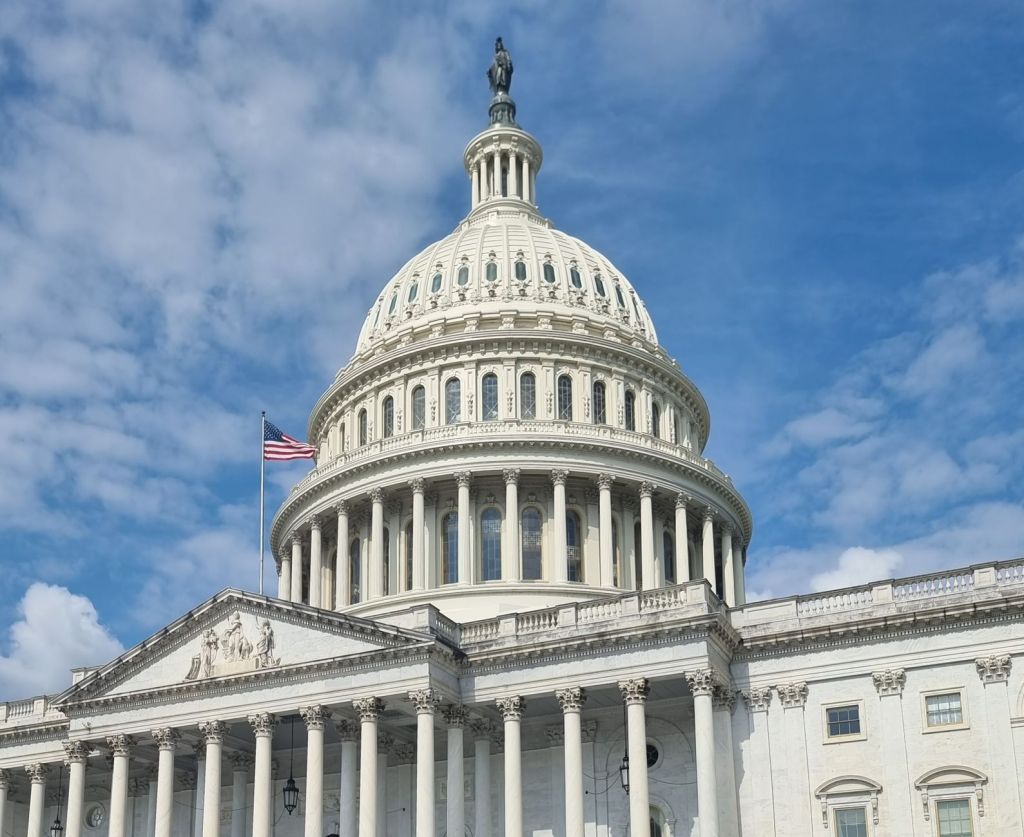
    Americans vote on Tuesday, November 3.
    These are midterm elections.
    Midterm means an election in the middle of a president’s term.
    Voters will choose all House seats.
    They will choose about a third of Senate seats.
    The president is not on the ballot.
    But the result still matters for stocks.
    It can change rules and spending.
    It can change how closely firms are watched.
    What Happened
    Forecasts point to Democrats winning the House.
    Control of the Senate is less clear.
    That is the view in a Reuters analysis on Monday.
    Investors are gaming out each outcome.
    Gaming out means planning for each possible result.
    Since Donald Trump returned to the White House in 2025, the S&P 500 rose about 27%.
    The S&P 500 is a list of 500 large US firms.
    It is often used to judge the whole market.
    That rise came with full Republican control of Congress.
    Now that control may change.
    History gives a mixed guide.
    Since 1930, the president’s party lost House control eight times at midterms.
    In five of those cases, the S&P 500 rose from Election Day to year-end.
    The median gain was 1.4%.
    Median means the middle value.
    Across all midterm years, the median gain was 1.9%.
    History is not a promise.
    It is only a guide.
    Why It Matters for Each Sector
    AI could face more questions.
    Democrats are expected to push for stricter AI rules.
    They could investigate big firms.
    That could add worry to AI stocks.
    But the president can veto new laws.
    A veto means the president says no to a law.
    That limits fast change.
    Defence could face a split story.
    If Democrats win big, oversight may tighten.
    Funding delays could worry defence firms.
    If Republicans hold ground, defence spending could rise.
    JPMorgan named L3Harris, Lockheed Martin, and Northrop Grumman as possible winners in that case.
    Health care is also split.
    Hospitals may benefit if Medicaid cuts are walked back.
    Medicaid is a health plan for people with low income.
    Insurers face a different story.
    Some hope for restored health subsidies.
    Subsidies are money that helps people pay for plans.
    Crypto firms could face more heat.
    Their ties to the Trump family draw attention.
    Banks could face more scrutiny too.
    Scrutiny means close checking by lawmakers.
    What Happens Next
    Vote first, on Tuesday.
    Then watch the counts.
    Some races may take time to call.
    Watch for divided control.
    Divided control means different parties run each chamber.
    That raises the risk of shutdowns.
    It raises the risk of debt-limit fights.
    A debt limit is a cap on how much the government can borrow.
    Watch also for debt talks.
    Spending choices on defence and health care could widen deficits.
    A deficit means the government spends more than it earns.
    None of this changes stocks alone.
    Earnings, jobs, and interest rates matter too.
    Final Thoughts
    An election does not pick stock winners by itself.
    It changes the rules of the game.
    It changes what firms must answer for.
    That is why investors watch Tuesday so closely.
    The market will react to the result.
    Then it will move on to the next test.
    Disclaimer: This article is for educational and informational purposes only and does not constitute financial advice.
    Sources: CNBC, https://www.cnbc.com/2026/11/02/midterm-election-stocks-defense-healthcare-crypto-ai.html ; Reuters analysis, https://wixx.com/2026/11/02/analysis-investors-gaming-out-congress-control-for-spending-ai-outlook/
    Related post: https://thefinanceclass.wordpress.com/2026/11/01/midterm-election-municipal-bond-market-investors/

  • Coinbase Made $719 Million in Profit — but Almost All of It Came From Crypto Gains

    Coinbase Made $719 Million in Profit — but Almost All of It Came From Crypto Gains

    Coinbase, America’s biggest listed crypto exchange, reported a $719 million profit for the third quarter of 2026. That sounds like a great quarter — until you look one line deeper. Almost all of that profit, $715 million, came from gains on crypto the company itself holds as an investment. Strip those gains out, and the core business earned just $78 million. That difference is the real story of Coinbase’s quarter.

    What Happened

    Coinbase reported third-quarter results on 29 October 2026, for the three months ended 30 September 2026. Headline net income was $719 million, reversing two consecutive quarterly losses and up from $433 million a year earlier. Earnings per share came in at $2.51, compared with expectations of a loss, according to company coverage.

    Under accounting rules Coinbase adopted, Bitcoin and Ether it holds on its own balance sheet are marked to market every quarter — if their prices rise, the gain flows straight into reported profit, even if Coinbase did not sell anything. Coinbase started with $718.7 million of net income, backed out a $715 million gain on crypto held for investment and a $39.2 million gain on other investments, then added back tax effects to land at $77.7 million of adjusted net income, rounded to $78 million. In plain terms: about 99% of headline profit was a paper gain on crypto Coinbase already owned, not fees collected from customers.

    Why It Happened

    The quarter itself was softer for crypto trading. Total revenue was $1.22 billion, flat from the previous quarter but 35% below the same period last year, as overall crypto market spot trading volume fell about 10%. Transaction revenue — fees from people trading — was $590 million. Subscription and services revenue grew 3% from the previous quarter to $570 million, making up 49% of net revenue, including stablecoin revenue up 5% to $307 million and other services less dependent on daily trading.

    Average USDC held in Coinbase products reached $22 billion, another all-time high and the fourteenth consecutive quarter of records, up 49% from a year ago. Coinbase’s share of global crypto trading volume reached 10.7%, its fourth consecutive quarterly gain. Prediction markets passed $200 million in annualised revenue, becoming one of the fastest-growing products in the company’s history, and Coinbase One subscribers hit an all-time high, up 24% year over year. Adjusted EBITDA was $333 million, up 60% from the previous quarter and the company’s fifteenth consecutive quarter of positive adjusted EBITDA, down from $801 million a year ago — a genuine sign of operating discipline.

    Why It Matters

    A big headline profit does not always mean the underlying business had a big quarter; sometimes assets a company holds simply went up in price. For Coinbase, the shift toward subscriptions, stablecoins and prediction markets matters more long-term than one quarter’s paper gain, because those revenues are steadier than trading fees. Timing also matters: just days after these results, crypto stocks sold off sharply following the Binance hack, with Coinbase among the fallers — about industry confidence, not Coinbase’s own results — showing how quickly sentiment can change in crypto.

    What Happens Next

    Coinbase gave an early look at the current quarter: transaction revenue through 25 October 2026 was approximately $165 million, and it guided subscription and services revenue to $550 million to $630 million for the fourth quarter. Investors will watch whether trading activity recovers after the Binance shock, whether USDC balances keep growing, and whether prediction markets continue fast growth. They will also watch the same accounting effect in reverse: if crypto prices fall in the fourth quarter, paper gains could turn into paper losses and drag headline profit down even if the operating business is steady.

    Final Thoughts

    Coinbase did not have a bad quarter — it made money, grew market share, and kept steadier businesses growing — but calling it a $719 million success story without the footnote would be misleading. The honest version: Coinbase’s core business earned $78 million, operating profit improved a lot from the previous quarter, and a $715 million rise in the value of crypto it holds did most of the work on the headline number. Understanding that difference separates reading a headline from understanding a company.

    Key figures:

    • Net income: $719 million (Q3 2026)
    • Gain on crypto held for investment: $715 million
    • Adjusted net income: $78 million
    • Adjusted EBITDA: $333 million, up 60% quarter over quarter
    • Total revenue: $1.22 billion, flat quarter over quarter, down 35% year over year
    • Subscription and services revenue: $570 million (49% of net revenue)
    • Average USDC held: $22 billion, up 49% year over year
    • Global trading market share: 10.7%

    Disclaimer: This article is for educational and informational purposes only and does not constitute financial advice.

    Sources: Coinbase Q3 2026 earnings announcement (October 29, 2026); Motley Fool earnings coverage and call transcript (October 29-30, 2026).

  • Binance Reopens Withdrawals After $6.3 Billion Hack as FBI Blames North Korea

    Binance Reopens Withdrawals After $6.3 Billion Hack as FBI Blames North Korea

    Binance, the world’s largest crypto exchange, has started letting customers withdraw their money again — just days after hackers stole about $6.3 billion in the biggest crypto theft ever recorded.

    Withdrawals reopened in stages on Sunday, November 1, and at the same time the FBI publicly blamed North Korea for the attack. It is a fast-moving story with two very different parts: customers getting access to their funds again, and investigators pointing the finger at a state-backed hacking group.

    This is a follow-up development to the October 31 post about Bitcoin falling after the hack — new facts here are the reopening of withdrawals and the FBI attribution, not a repeat of the October 31 price story. Related reading: Bitcoin fell below $77,000

    What Happened

    Binance froze withdrawals after the hack on Thursday, October 29. On Sunday, it began reopening them in phases, starting with 15 cryptoassets including Bitcoin, Ethereum, XRP, Dogecoin, Tether (USDT) and USD Coin (USDC). Bitcoin withdrawals resumed first, shortly after 2 p.m. Singapore time, and other networks including Ethereum, BNB Smart Chain, XRP and Base followed later in the day.

    Binance warned users to expect congestion and delays, which is normal when a lot of people try to move money at once after a freeze. It said it was prioritising tokens based on user demand over the past week.

    The exchange also said it has now covered most of the loss itself. On Saturday it said about 90% of the stolen amount had been replaced, and later updates put the covered amount at about $6 billion, or roughly 95% of the $6.3 billion total. The remaining, less liquid tokens may take longer to buy back. Binance has said repeatedly that users will not bear the financial impact, and it set aside about $6.34 billion of company funds to cover the losses, using its emergency reserves, insurance funds and treasury money.

    Within roughly three hours of withdrawals reopening, about $2 billion in Bitcoin, Ether and stablecoins left the exchange, according to crypto tracker Whale Alert. That does not mean more money was stolen — it mostly means customers moving their own funds out after days of being unable to touch them.

    Why It Happened

    The FBI said on Saturday that North Korea was responsible for the theft of more than $6 billion in virtual assets from Binance on or about October 29. Specifically, it named a group called TraderTraitor, which it describes as a North Korean state-sponsored hacking unit and part of the wider Lazarus Group.

    According to the FBI, TraderTraitor actors have been converting the stolen assets mainly into Ether, and investigators expect them to keep laundering the money through decentralised finance platforms and instant swap services. The FBI published hundreds of addresses it says held or once held the stolen funds — more than 600 Ethereum addresses, just under 20 Bitcoin addresses and one Solana address — and asked crypto businesses, node operators and exchanges to block transactions from them.

    Chainalysis, a blockchain analysis firm, warned that the attackers are likely to use tens of thousands of addresses in the coming weeks, which makes blocking them much harder in practice.

    There is one wrinkle worth noting honestly. When President Donald Trump was asked about the hack on Saturday, he said the US was still learning about it and added: “We don’t know if it’s North Korea — but if it is, we’ll talk to North Korea about it.” So the FBI’s attribution is clear, but the political message has been more cautious.

    Why It Matters

    First, this is about trust. Binance is the biggest exchange in crypto, and a $6.3 billion theft shakes confidence in the whole industry — even for people who never used Binance. How fast customers get their money back, and whether Binance really covers the full loss, will shape that trust for months.

    Second, the FBI naming North Korea matters for how the rest of the industry responds. When law enforcement publishes hacker addresses and asks exchanges to block them, it puts pressure on every platform to cooperate. It also shows how crypto theft has become a national security issue, not just a company problem. North Korea-linked groups were already blamed for more than $2 billion of crypto hack losses in 2025, according to industry data cited by CoinTelegraph.

    Third, the scale is hard to overstate. Analysts have described this as possibly the biggest financial robbery ever, bigger than the $1.5 billion Bybit hack in February 2025. The bulk of the theft unfolded in around 20 minutes late on Thursday, according to blockchain firms TRM Labs and Chainalysis.

    What Happens Next

    Binance is due to publish proof of reserves on Monday, November 2. That is a public snapshot meant to show that customer funds are fully backed. After a hack this size, that report will be watched closely — and skeptics will want to see details, not just a headline.

    Withdrawals will continue to reopen in phases, and more money is likely to leave the exchange in the short term as nervous customers move funds elsewhere. That is not necessarily a sign of failure. After a freeze, outflows are expected.

    The longer investigation — tracking the stolen funds through swaps and decentralised platforms, and whether any of it can actually be recovered — will take weeks or months. About $3 billion in affected assets had been frozen as of Friday, but frozen funds are not the same as recovered funds.

    Final Thoughts

    For ordinary crypto users, the lesson from this week is blunt: even the biggest exchange can be hit, and “big” does not mean “safe.” Binance moving fast to reopen withdrawals and cover losses helps, but it does not erase the fact that $6.3 billion was taken in the first place.

    The FBI attribution adds a serious geopolitical layer to what started as a company security failure. Whether it leads to real consequences for the hackers is a different question — and one that will take a lot longer to answer than a weekend of reopened withdrawals.

    Key figures:

    • Amount stolen: about $6.3 billion (October 29, 2026)
    • Covered by Binance: about 90% on Saturday, later put at about $6 billion (roughly 95%)
    • Company funds set aside: about $6.34 billion
    • Withdrawals reopened: Sunday, November 1, in phases, starting with 15 cryptoassets
    • Outflows in first ~3 hours: about $2 billion, per Whale Alert

    Disclaimer: This article is for educational and informational purposes only and does not constitute financial advice.

    Sources: Reuters report on Binance resuming withdrawals (November 1, 2026); CoinDesk report on the FBI’s North Korea attribution (October 31, 2026); Binance statements as reported by Reuters and CoinDesk.

  • Bitcoin Falls Below $77,000 After $6.3 Billion Binance Hack, the Largest Crypto Theft Ever

    Bitcoin Falls Below $77,000 After $6.3 Billion Binance Hack, the Largest Crypto Theft Ever

    Introduction

    Bitcoin fell below $77,000 for the first time in more than a month on Friday, October 30, after Binance, the world’s largest crypto exchange, disclosed a hack worth about $6.3 billion. It is the largest theft in crypto history.

    What Happened

    Bitcoin dropped as much as 3.1% on Friday, hitting a low of about $76,300, according to Bloomberg. It had spent most of the week trading near $80,000 before the hack news pushed it through that level.

    Binance’s own token, BNB, fell roughly 5% over 24 hours to around $700. Crypto liquidations topped $1.55 billion in a day, with more than 246,000 traders liquidated, according to CoinGlass data.

    Binance said it has set aside $6.34 billion of company funds to deal with the fallout. Around $3 billion in affected assets has been frozen with the help of blockchain partners. Deposits and withdrawals were temporarily suspended while the exchange carried out security checks, with a target of restarting in about 40 hours. Binance co-CEO Yi He said the exchange will cover all user losses.

    The early investigation points to a compromised laptop belonging to a Binance engineer, which attackers may have used to submit unauthorised withdrawals. Binance said it found no evidence that wallet private keys were leaked. Investigators have linked the attack to North Korea, according to CoinDesk’s live coverage.

    Why It Happened

    Two things hit crypto at once. The hack itself shook trust, even at the biggest exchange in the industry. And it landed on a day when stock markets were already falling, with the Nasdaq down almost 3%. When investors are nervous everywhere, risky assets like crypto usually fall first and fastest.

    The size of the theft is what makes this different from past exchange hacks. At about $6.3 billion, it is larger than any previous crypto theft, and it happened to the exchange that many people assumed was the safest place to keep crypto.

    Why It Matters

    Here are the key figures:

    • About $6.3 billion stolen, the largest crypto theft on record.
    • About $3 billion frozen so far through blockchain partners.
    • $6.34 billion set aside by Binance from company funds.
    • Bitcoin down 8.4% in October, on track for its second straight October decline.
    • BNB down about 5% in 24 hours to around $700.

    For ordinary crypto holders, the practical question is simple: is my money safe on an exchange? Binance says it will cover all user losses through its emergency fund and company resources, and it has promised updated proof of reserves after the cleanup. But the hack is a reminder that keeping large amounts of crypto on any single exchange carries real risk, no matter how big that exchange is.

    What Happens Next

    Watch three things. First, whether Binance restarts deposits and withdrawals on schedule and whether any more funds are recovered. Second, whether regulators respond, since a theft of this size will be hard for them to ignore. Third, whether bitcoin holds above its 200-day moving average near $73,000, which some analysts see as the next important support level if selling continues.

    Final Thoughts

    Crypto has survived big hacks before, and bitcoin has recovered from worse price falls. But each major theft chips away at trust, and trust is the one thing the crypto industry cannot buy. Binance’s promise to cover losses will help in the short term. The longer test is whether exchanges can prove their security is strong enough for the size they have reached.

    Disclaimer: This article is for educational and informational purposes only and does not constitute financial advice.

    Sources: CNBC coverage of the Binance hack: https://www.cnbc.com/2026/10/29/circle-tether-freeze-funds-impacted-by-potential-binance-security-issue.html; Bloomberg reporting via Economy24 (https://economy24.co.za/2026/10/bitcoin-drops-below-77000-as-binance-hack-shakes-crypto-market/) and CoinDesk live coverage (https://www.coindesk.com/markets/2026/10/30/live-news-binance-hack-rattles-crypto-as-intel-plunges-and-ai-spending-fears-hit-tech?post-id=1bc35b949f0e).

Is this your new site? Log in to activate admin features and dismiss this message
Log In